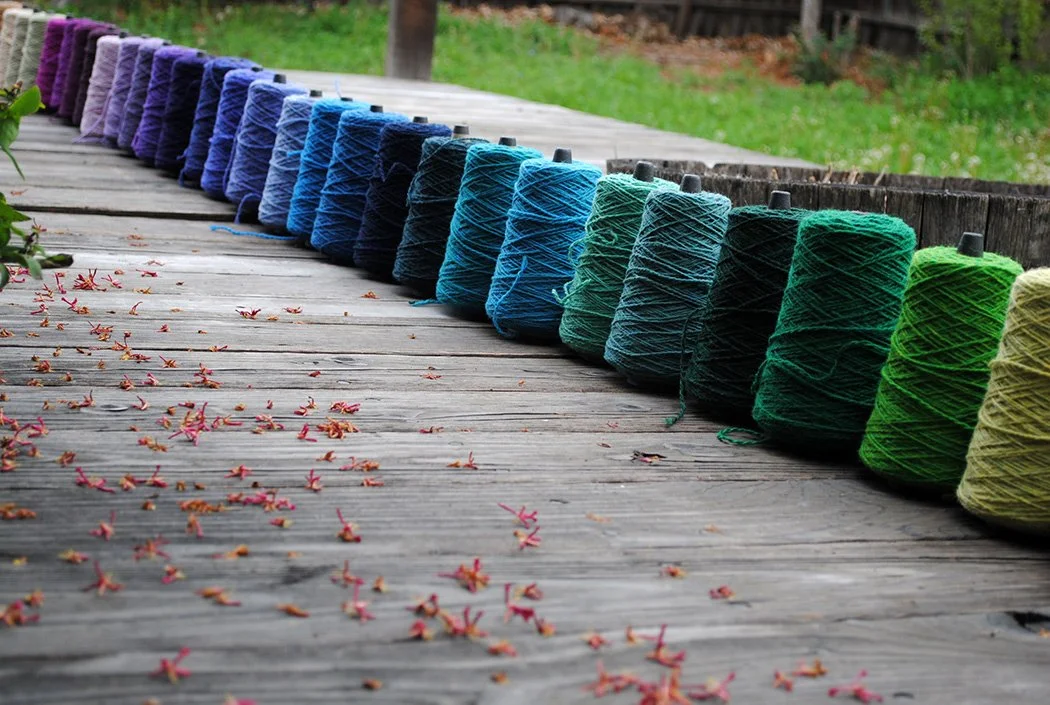
What makes a good tapestry yarn?
This workshop is a deep dive into tapestry yarns. My goal is to teach you how to evaluate a yarn for tapestry yourself. The class has many examples of this along with questions to ask as you test out a yarn you have available to you. I also include an extensive list and review of tapestry yarns on the market.
I initially offered this class with a live portion on Zoom. You’ll see those recordings in the class if you want to see what happened in the live runs. But each of the video clips I offered in the live class are also included to be watched separately.
You can find the class on my class platform Pathwright here:
https://rebeccamezoff.pathwright.com/library/what-makes-a-good-tapestry-yarn-186928/about/
It is $39.
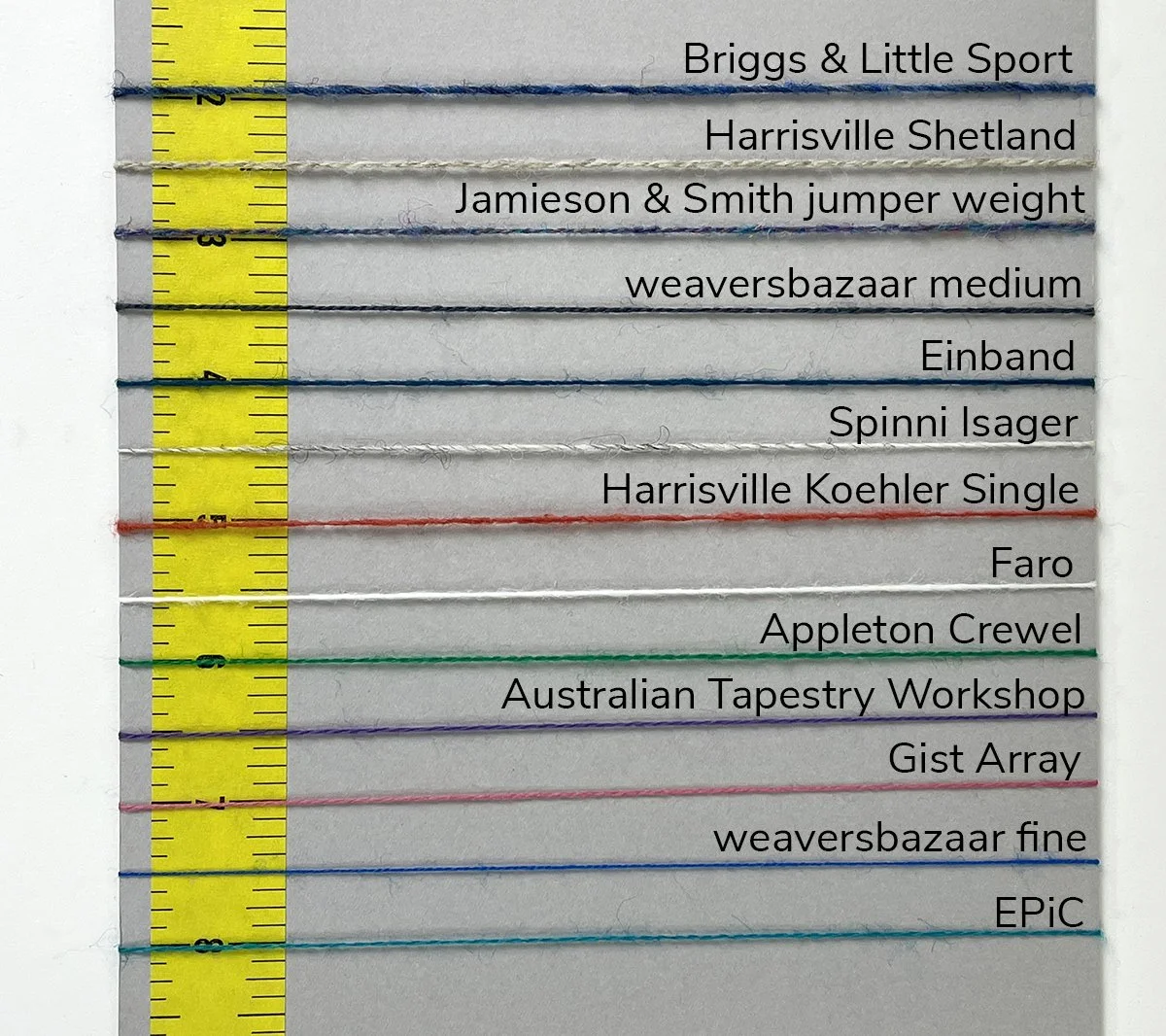
The class includes reviews of over 20 tapestry weft yarns available commercially. I do try to stay up to date with yarns that come and go, but just because a yarn that isn’t being manufactured right this minute doesn’t mean it won’t be again soon. We saw that with Paternayan being made again by Colonial Needle and EPiC going out of business in 2025 and being bought and brought back in 2026.
The materials in this class provide a framework for you to evaluate yarns yourself. There is no way I could be familiar with all the yarns in the world that might work for tapestry. With the information provided in this class, you should be able to purchase a bit of a yarn you’re interested in and test it out for yourself. The results and image you want to communicate in your tapestry weaving are of primary importance when choosing a yarn, and only you can know whether a particular weft will work for you or not! (But for beginners I do have some solid suggestions of where to start!)
The class includes things you might experience with yarns that in my opinion don’t work for tapestry weaving. For example the image below is woven with Knit Picks Wool of the Andes. This is an inexpensive yarn that comes in a lot of colors, but it is very soft for tapestry weaving. It packs and packs and packs and is very difficult to manage in the shed. It is far from an ideal tapestry yarn and if you’re struggling with a yarn like this as a beginner, it is the material, not you.
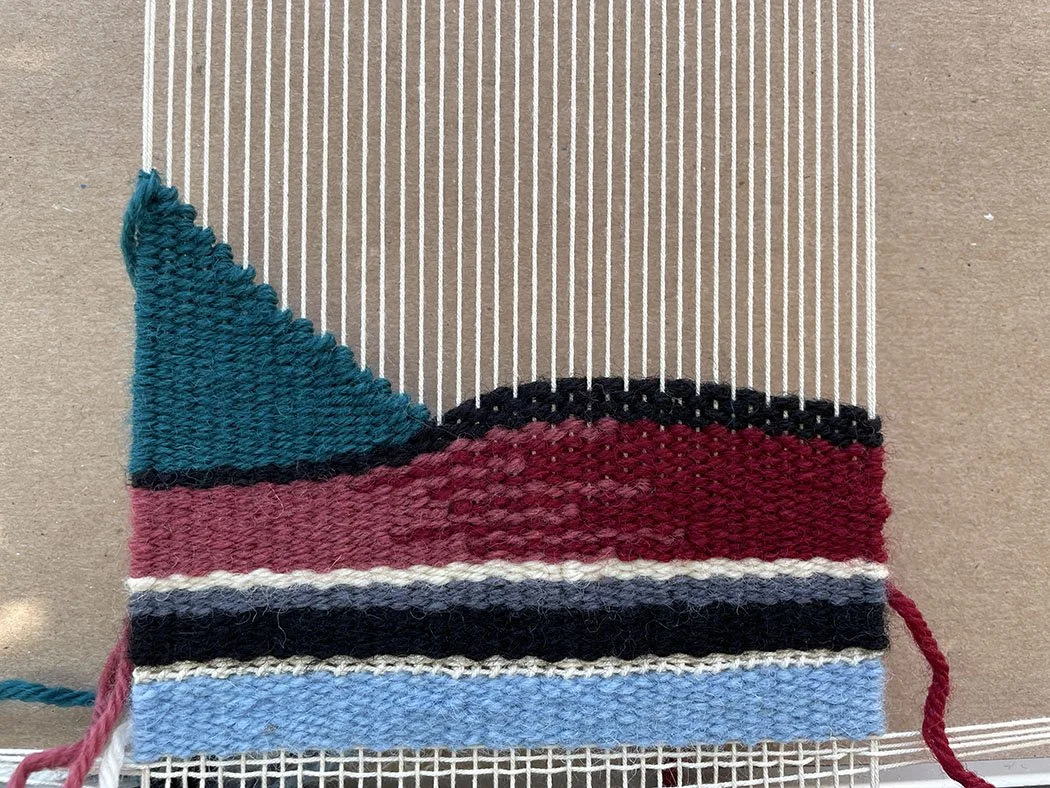
Attempting tapestry with Knit Picks Wool of the Andes. This is not a recommended yarn for tapestry weaving.
In contrast, tapestry weft yarns designed for tapestry such as Gist Yarn’s Array pictured below, are much easier to manage.
Gist Yarn’s Array is a recommend tapestry weft yarn.
I hope you’ll join me in an exploration of tapestry weft yarns! The class is available to you for as long as you want to use it and you can ask me questions in the class at any point.
Happy Weaving!