Exciting news about online tapestry classes: Any-time access


My online classes are moving to any-time access. That means you can use the material for as long as I'm teaching online.

I teach tapestry because I love it. Both the tapestry weaving and the teaching. Almost a year ago I launched my online tapestry course, Warp and Weft: Learning the Structure of Tapestry. I want to thank all of my dedicated students over the past year who wove such wonderful things and who were patient with me as I learned an incredible amount about technology, shooting and editing video, and how to structure these classes. I do absolutely everything you see myself.

For a long time I was very resistant to the idea of "forever" access to my classes for various reasons. And I thought it would be better to offer a course that actually ended as an incentive for students to make some time each week to do the work. I still believe that last part, but I have warmed up to the idea of "forever" access considerably.

As it turns out, all of you have very busy lives away from your looms. Asking you to finish an intensive class in six months was a tall order and your discomfort with this time restriction was palpable.  

So all of my online classes are now open for access as long as I am teaching online. Though I can't make any concrete promises about how long I'll be on the planet, I hope to be doing this job for many decades and as long as I'm teaching, you can access your course. I will be answering questions in each class for six months but access to everything else in the class including past answers and discussion with fellow students will continue indefinitely.

I have opened registration for the next set of Warp and Weft: Learning the Structure of Tapestry classes which start May 11th.

These are the classes starting in May:
All-Three-In-One
Part 1
Part 3

The next Part 2 starts August 3rd and registration for the current Part 2 is still open.

Self-Directed classes have moved to any-time access with any-time start dates. If you want to take the Self-Directed class which is the same material without feedback from me, you can register and start all the material today.

Why there are specific start dates for classes
I will continue offering these long courses with specific start dates (unless you take self-directed). I  value the interaction that develops among a class of students and having everyone start at about the same time is what allows this to happen. Contributing to a community of people interested in tapestry is the most important goal of my teaching and so I structure the classes in a way that will facilitate this. Ongoing discussion and sharing is also available to students through a private Facebook page.

And everyone needs a vacation now and then!
UPDATE 4/30/15: Unfortunately the backpacking trip described below has been cancelled. I will be going to the mountains this summer, but for shorter periods of time. So I will be available to answer your questions. And if I'll be on the top of a mountain for a few extra days, I'll let you know ahead of time.
 It has been several years since I took a vacation from the internet. I am an avid backpacker and so this summer I am going to go on an extended trip. I will largely unavailable for feedback for 4-5 weeks starting most likely in late June. I wrote more about this decision in yesterday's blog post.

So from the start date of my hike I will be mostly unavailable to answer your questions. You can still ask them and I will be taking a few resupply days where I will answer anything that seems urgent. And since the trail is about 500 miles long, I am pretty sure if you met me at a trailhead with a cold Pepsi and a gluten free salad, I'd answer any question you had.

So to make it up to those of you who are dying to sign up for the May classes, I will be extending that six month window where I answer questions to eight months for this registration. You'll have me answering your questions until January 11th, 2016 (except for those days I'll be walking those 500 miles). Of course the material will remain open "forever".


There is an extensive FAQ page on my website HERE which may answer further questions. Please feel free to CONTACT me for clarification.

I am working on a new online class, Color Gradation Techniques for Tapestry, and will have information about a start date in a few weeks.

Registration is open for Warp and Weft: Learning the Structure of Tapestry. Click HERE for more information and a link to register.
And if you want to make sure to get all my updates about online classes and workshops as well as information I only share with people in email, sign up for my newsletter HERE.

Just waiting for the snow to melt for some outside weaving time...

Giving and receiving... or where I will be this summer

Are you a giver or are you better at receiving?

The flow of life works best when both things exist, don't you think? But each of us is probably better at one thing than the other.

At one point in my life I did a fair amount of yoga. In fact, I'd say that yoga set me on a path of self-exploration that has made me the happy goofball I am today... and allowed me to find success in my business and my personal life.

Then about a decade ago, I stopped.

I lived in various places in northern New Mexico and southern Colorado--all small towns, all without a yoga teacher I connected with. There were times where I tried. For a few months I drove an hour and a half to a spiritual community who had a wonderful Ashtanga teacher. But the drive was too much and I stopped. When we moved to Santa Fe, I did find a yoga studio with a couple teachers I really liked. But I let my head convince me I was too busy for the time it takes to connect with things that are real. I had a business to start.

Last month I found a small studio in Fort Collins which seemed right. The names of the classes don't contain the words hot, power, or core. The teacher is young and in training and the studio is in the basement of a public space that is noisy. But it doesn't matter. I can feel myself getting stronger again and more importantly, listening to my own intuition.

Today Krista talked about giving and receiving. I find in yoga classes that often what I am learning with my body connects immediately and strongly with my life.

I am certainly on the giving end of the spectrum.
I'd far rather make sure everyone around me was happy and taken care of than admit that I need to feed myself in important ways to be able to keep giving. This is not a healthy way to live. (At the most basic, I can't possibly please everyone.)

When I was an occupational therapist, it was all about giving. But I had a network of co-workers and family who were medical people and who could provide the support a medical professional needs to continue to help people in need. Now that I am self-employed, it is so easy to work all the time. I have to learn to create my own structure for receiving the quiet joy that allows me to give to others.

This is not easy for someone who is a little bit type-A obsessive about meeting all obligations and making everyone happy as much of the time as possible.

Perhaps you see where I'm going with this.

Tomorrow I'll be releasing my new schedule of classes with some exciting information about your access to the material once you register. Along with that comes an exception.

Update 4/27/15: Unfortunately, my hike as described below has been cancelled. We will be going backpacking, but not for this long stretch. I will be available to answer questions all summer. If I am off on a trail somewhere for a few days, I'll notify the classes and make the time up by answering questions on a weekend.

I will be taking a 4-5 week hike this summer from Denver to Durango along the Colorado Trail again. I'm excited to see a couple new routes finished since the last time I did it. I originally was not going to run any online classes this summer because I won't be available for a time to answer questions. But I had so many requests for classes, that I decided to offer another set of the beginning tapestry techniques course starting in May.

I will be out hiking for about a month. The trip will start sometime in late June depending on the what the snowpack does in Colorado in March and April. And though I won't be present for your tapestry questions for a bit, you can follow my hike here on the blog. I'm bringing a Hokett loom and a camera. And I'll be back soon undoubtedly with some good stories.


Hiking long trails is yoga. Your brain stops worrying after a few days and your body learns a whole lot about strength, pain, and not giving up. It is centering and it always teaches me to keep my head up and notice what is happening around me. If I learn the lesson well, I can bring it home to the rest of my life.

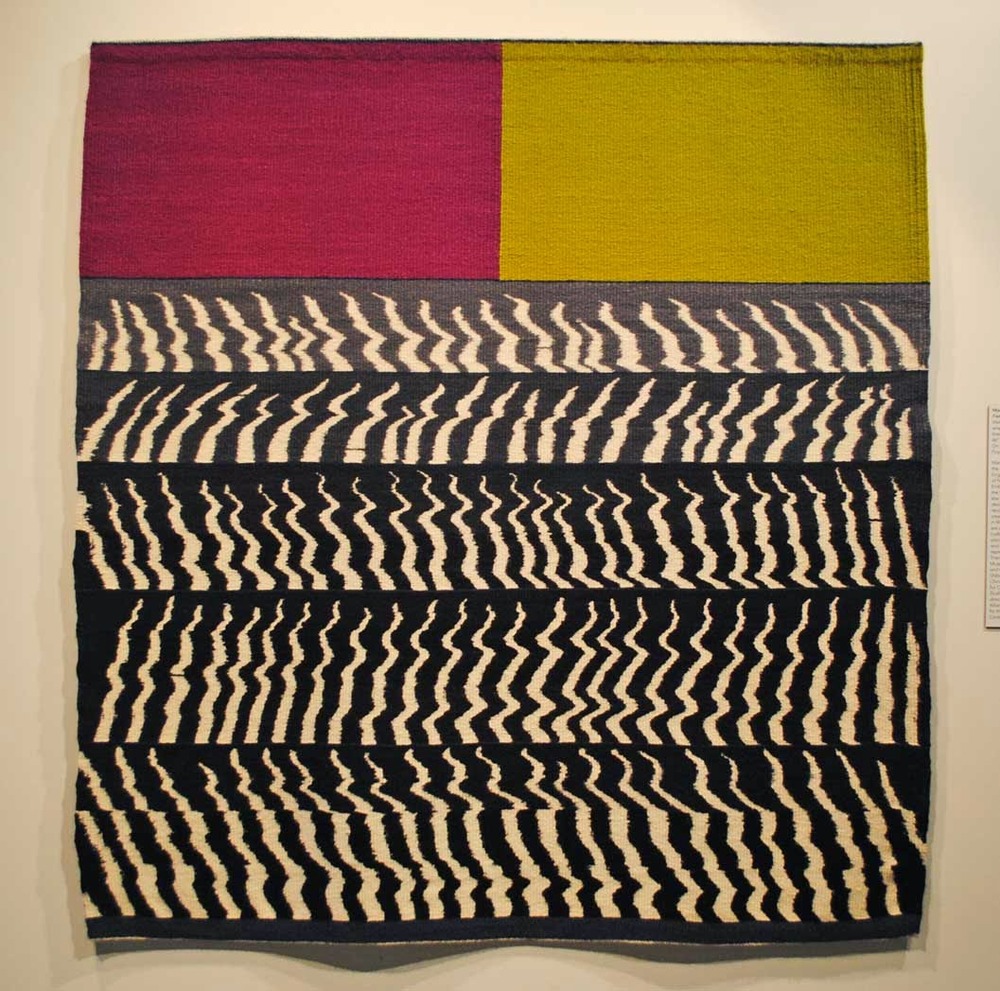
The ikat tapestry of Mary Zicafoose and her solo show, Color Fields

I was able to see Mary Zicafoose's new show, Color Fields: selected works by Mary Zicafoose while in Omaha. In fact I was so excited to see it that I went a day early. The show didn't open until March 6th. I might have gotten some nose-prints on the gallery windows, but what I saw told me I had to come back.

A day and at least one Chipotle stop later, I returned to find the gallery all lit up, the doors open, and a welcoming student manning the desk. The show is a wonderful mix of her tapestries and monoprints.
Monoprints, ikat tapestries, and carpet by Mary Zicafoose
Mary Zicafoose is a Nebraska artist. Here is some of her artist statement from the show:
Like all artists, I have many stories to tell and I am as compelled to weave tapestries based on symbols of identity as I am to record the line where the earth meets the sky in the Nebraska landscape. The work within this exhibition represents several different series of tapestries, carpets, and prints spanning the last decade. New Dreams, Ancient Texts, Blue Prints, Sun Signs, Grasslands, and Mountain for the Buddha, are the names of specific groups and collections of pieces. These are the titles of the stories I have told in an attempt to uphold my part of an old agreement. My work strives to represent an understanding of sorts, a contract I made many years ago with a Peruvian weaver that I encountered on the edge of a high ruin in the Andes. The exact visual terms of our deal has to do with the purposeful evolution of archetypal symbols. My attempts at unraveling this concept surfaces within the magic of the dyepot, behind the endless processes of the loom, and through the layering of ink on a brayer in the print studio....
I create tapestries, each an original, signed and single edition, using this very complex Ikat surface design dye technique--stretching and collating each individual fiber, wrapping, dyeing, unwrapping, re-wrapping, and then over-dyeing to create layers of images and color. The Ikat technique is highly important in my process not just because it allows me to create very painterly and complex visual woven patterns, but also because of what it symbolizes. The term Ikat means to "bind" or "tie" in the Malaysian language, and binding is precisely what I strive to investigate: the infinite, intricate, and repetitive ways through which cultures, rituals and collective memories bind us together. I create textiles that aspire to do more than grace museums, command public spaces, and decorate homes. They are woven metaphors that strive to tie the contemporary, the symbolic, and the timeless together -- coded to become a magical and lyrical form of cloth.
Mary talks some about her ikat process on her website HERE. Ikat is a very time-intensive resist dye technique. To produce images like these, the fiber has to be carefully wrapped according to the design and repeated for each color.
Mary Zicafoose, Mountain for the Buddha, Reason, weft-faced ikat tapestry, wrapped, dyed and woven wool on linen warp, diptych, 58 x 54 inches
Mary Zicafoose, Mountain for the Buddha, Reason (detail)
One of Mary's rugs is featured in the show. Mary designs these wool and silk hand-knotted carpets which are manuafactured by InnerAsia/Khawachen.
Mary Zicafoose, Mountain for the Buddha, Caution; monoprints, various; Mountain for the Buddha, Reason
She is giving an artist's talk and a reception Wednesday March 11th. Details on her website HERE.

Kaneko: FIBER

I became interested in Kaneko because the American Tapestry Biennial 10 is hanging there right now. But two things really convinced me to drive the 500 miles from Colorado to Omaha. (1) Dr. Jessica Hemmings was giving a lecture about her new book and exhibition, Cultural Threads and (2) there were five other fiber shows there. Neither the lecture or the other shows disappointed.

I wrote about the ATB10 show at Kaneko here: Kaneko: the tapestry of ATB10

Florabunda
This is an astounding display of Hawaiian shirts which serves to highlight the bright designs of fabric designers. I loved just walking among these shirts. It was mesmerizing.
Florabunda exhibit, The Kaneko
Fabric of Survival
This was a stunning exhibit about the Holocaust. It was a large gallery packed with large-scale embroideries which told the story of the creator, Esther Nisenthal Krinitz's life. It was so incredible I didn't take a single photo.

Fiber Legends
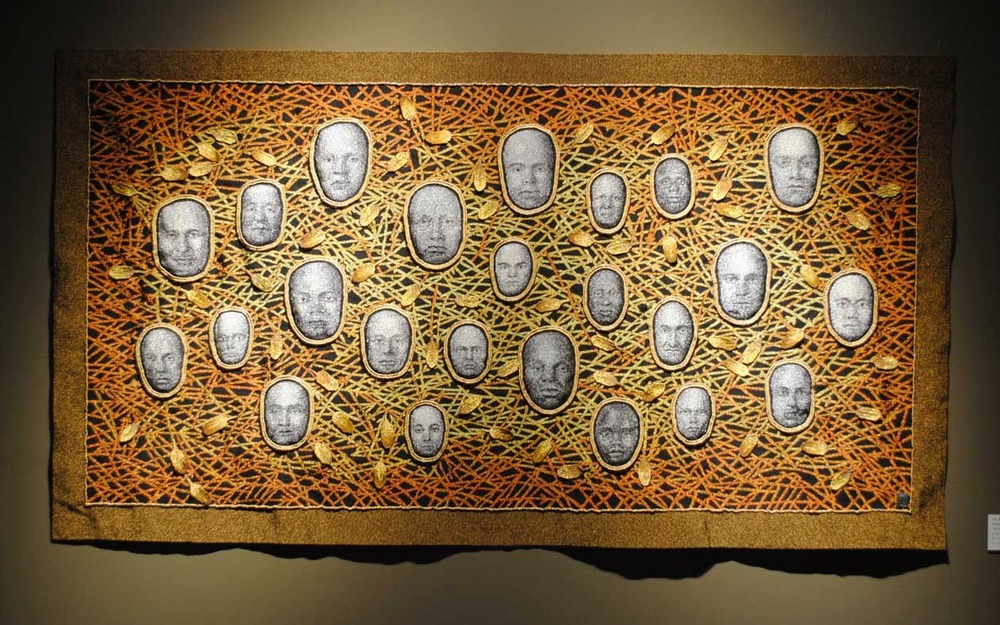
This was the show that really engaged me. The amazing skill in Jon Eric Riis' work is something you have to see in person. These pieces all used metallic threads in a wide range of colors. When you go to see ATB10, make sure to leave a large chunk of time to study this work.
This installation conveys the different way in which fiber art conveys movement, captures and transmits culture, and functions as fine art through the works of Nick Cave, Sheila Hicks, and Jon Eric Riis.          --Fiber Legends statement
Sheila Hicks, Menhir II, 1965-1985, cotton, linen, wool; hand-wrapped, spliced. Each of 23: 152" x 2"-12" diameter.
Sheila Hicks, Menhir II, detail
Nick Cave, Untitled Soundsuit, 2008, mixed media with mannequin, 100 x 25 x 14 inches
And here is Jon Eric Riis. I have only seen a few of his pieces in person and it was mesmerizing to look at the play of the metallic threads in the light. There were 9 large-scale works in this show by Riis. All very different, all incredible.
Jon Eric Riis, Ancestor's Tapestry, handwoven silk and metallic thread, gold glass beads, 42 x 75 inches
Jon Eric Riis, Ancestor's Tapestry detail
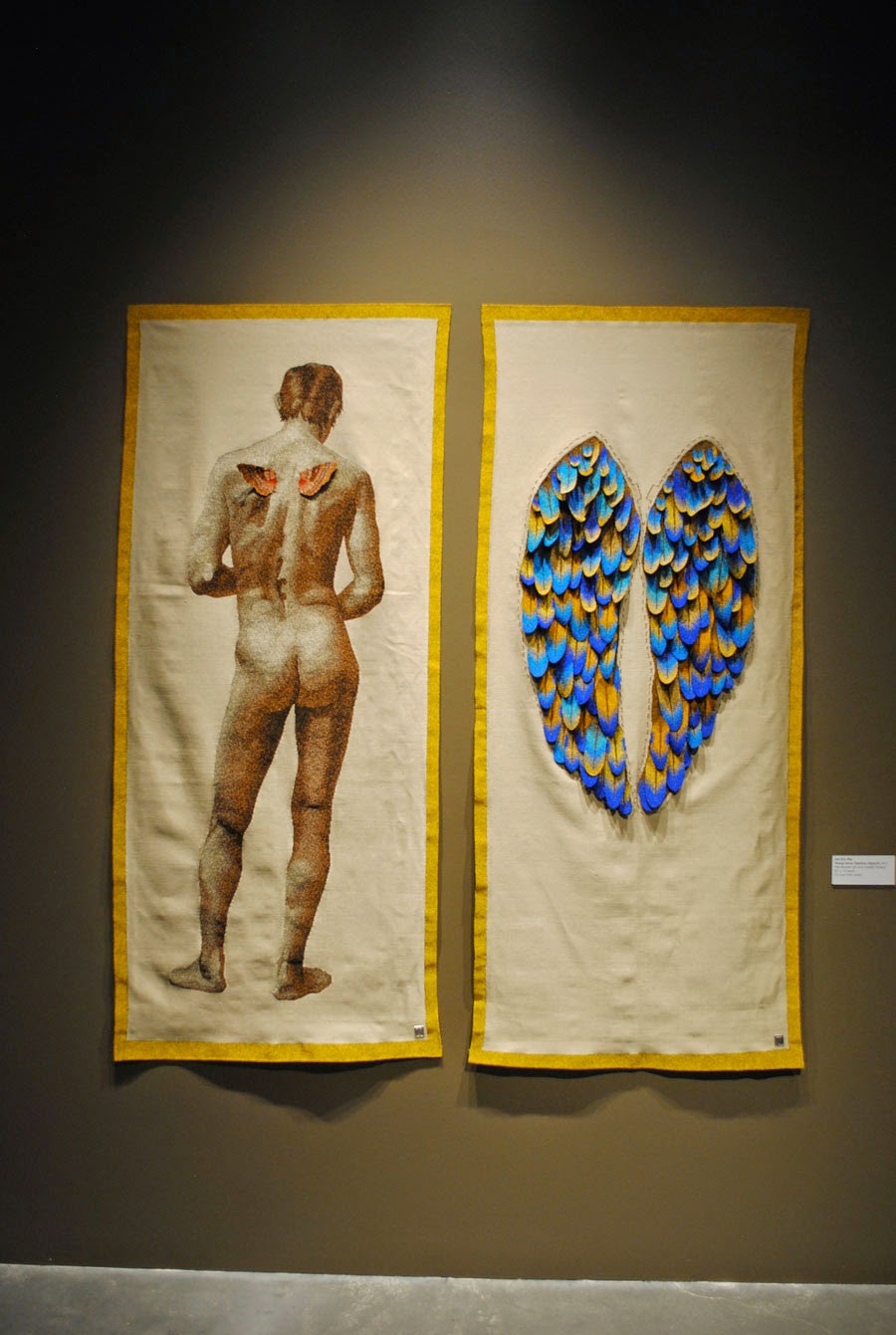
Jon Eric Riis, Young Icarus Tapestry (diptych), handwoven silk and metallic thread, 32 x 72 inches each
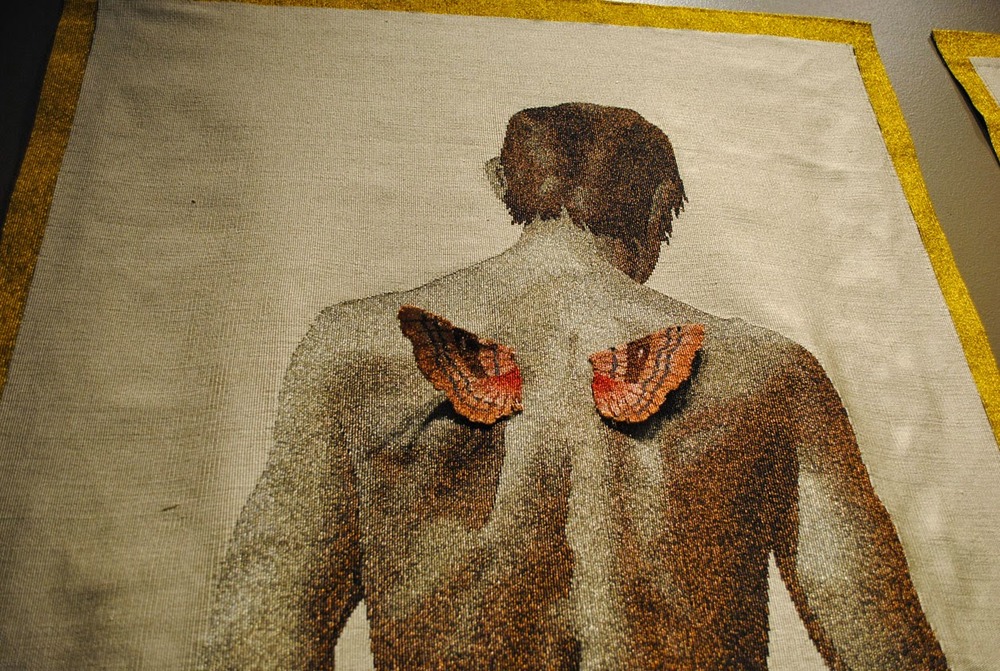
Jon Eric Riis, Young Icarus Tapestry (detail)
Jon Eric Riis, Multicolored Tapestry Skull Coat, handwoven metallic thread, leather, freshwater pearls, black agate beads, and coral, 34 x 66 inches
Jon Eric Riis, Multicolored Tapestry Skull Coat (detail)
Jon Eric Riis, Neo Classical Male Tapestry, tapestry woven silk and metallic thread, Swarovski crystal beads, 52 x 68 inches (left), and Icarus II, Tapestry woven silk and metallic thread, crystal beads, 56 x 158 inches (right)
Jon Eric Riis, Icarus II (detail)
There was also a large exhibit called Global Threads which included the work of Yoshiko Wada, Jessica Hemmings, Mary Zicafoose and Susan Knight. The largest part of this exhibit were the kimonos of Yoshiko Wada. They were exquisite, varied, and I took no photos of them.

Dr. Jessica Hemmings was the juror for ATB10 and she also had a part in this exhibit.
Jessica Hemmings, the renowned textile scholar, explores contemporary textiles and their relationship with postcolonial culture. Hemmings’ exhibition “explores the interrelationship between craft, art, design and contemporary culture” by focusing on examples of contemporary textiles produced by designers, artists and makers that communicate postcolonial thinking.                     --Kaneko's website
Her fascinating talk, Cultural Threads: transnational textiles today, prompted me to order her new book of the same name as soon as I got back to the hotel. She talked about the relationship between language and object with many fascinating examples about objects and their meaning. She talked about the meanings attached to textiles and how they are portable objects and thus pick up meaning around the world.
curated Jessica Hemmings, Cultural Threads
As I walked into the museum, the first piece I saw was this large work by Mary Zicafoose. As you'll see in the video linked below, she had a huge part to play in getting this fiber show together. It was nice to be welcomed by this tapestry. Watch for my next blog post about her solo show also currently in Omaha.
Mary Zicafoose, Fields of Desire, weft-faced ikat tapestry, dyed, wrapped & woven wool on linen warp.
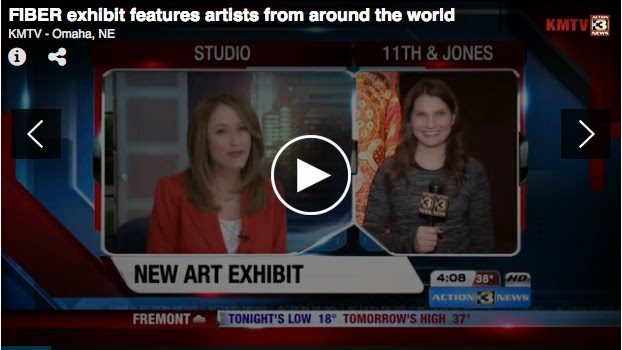
Here is a post from Omaha's local news station with a nice video about the show (Click link in blue).
http://bit.ly/1vXSzwP

Kaneko: The tapestry of ATB10

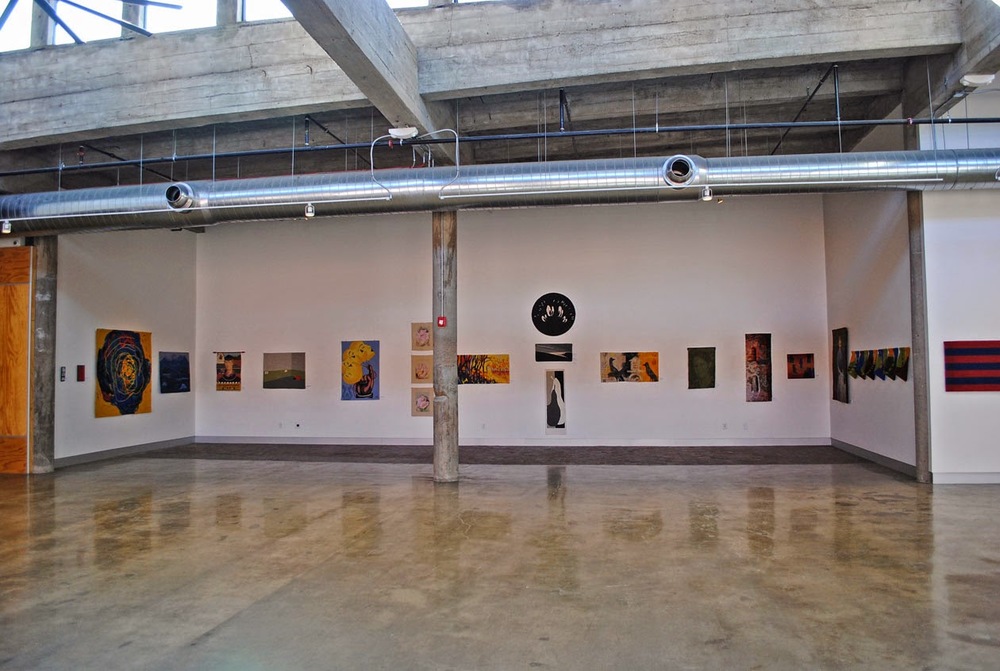
Nebraska is almost 500 miles wide. I know because I drove from northern Colorado to see the fiber shows currently up at Kaneko in Omaha. I wanted to see American Tapestry Biennial 10 again and I decided to go when Dr. Jessica Hemmings who juried the show was giving a lecture. 

I visited this show in San Diego last May and you can see how Visions Art Museum displayed the show

HERE. The show in Omaha looks very different. The huge space dwarfs the tapestries but does help you feel like they aren't hung quite as close together as they actually are. I posted many detailed photographs of some of the tapestries in the post from Visions.

Here are a few shots of the Kaneko installation and some images of tapestries I didn't show in San Diego as well as a short video. The video was done with a hand-held video camera. Please don't yell at me because it is shaky. It is only intended to give you a feel for the space.

I have enjoyed all of these pieces over the last year and a half. Because I am one of the co-chairs for ATB10, I had the great pleasure of being the first person to see them as they were submitted by the artists, and now I have seen the show twice.

I was unable to get a good shot of Clare Coyle's piece in San Diego. Here is a little bit better photo of this marvelous piece plus a detail.

Clare Coyle, The Land Gives Us....

4.25 x 22.25 x 0.5 inches, cotton, silk, linen, wool

Clare Coyle, The Land Gives Us.... (detail)

Deborah Corsini, Disconnect; Connie Lippert, Wakulla (red line series); Rebecca Mezoff, Emergence VII; Clare Coyle, The Land Gives Us....; Mary Lane, Untitled #140; Kaneko displayed Cecilia Blomberg's Birch Rolls piece differently than Visions did.

Cecilia Blomberg, Birch Rolls, Each of 10: 118 x 5.5 inches, cotton warp, cotton fabric strips

Ann Booth's piece was much easier to appreciate in this show as it was hung in a spot I could look at it from both sides easily. This piece plays with you a little bit. This photo shows it from the right side and straight on. I believe she made this happen with soumak.

Ann Booth, Tahirih (two views), 32 x 21 inches, wool weft, cotton warp

Ann Booth, Tahirih (detail)

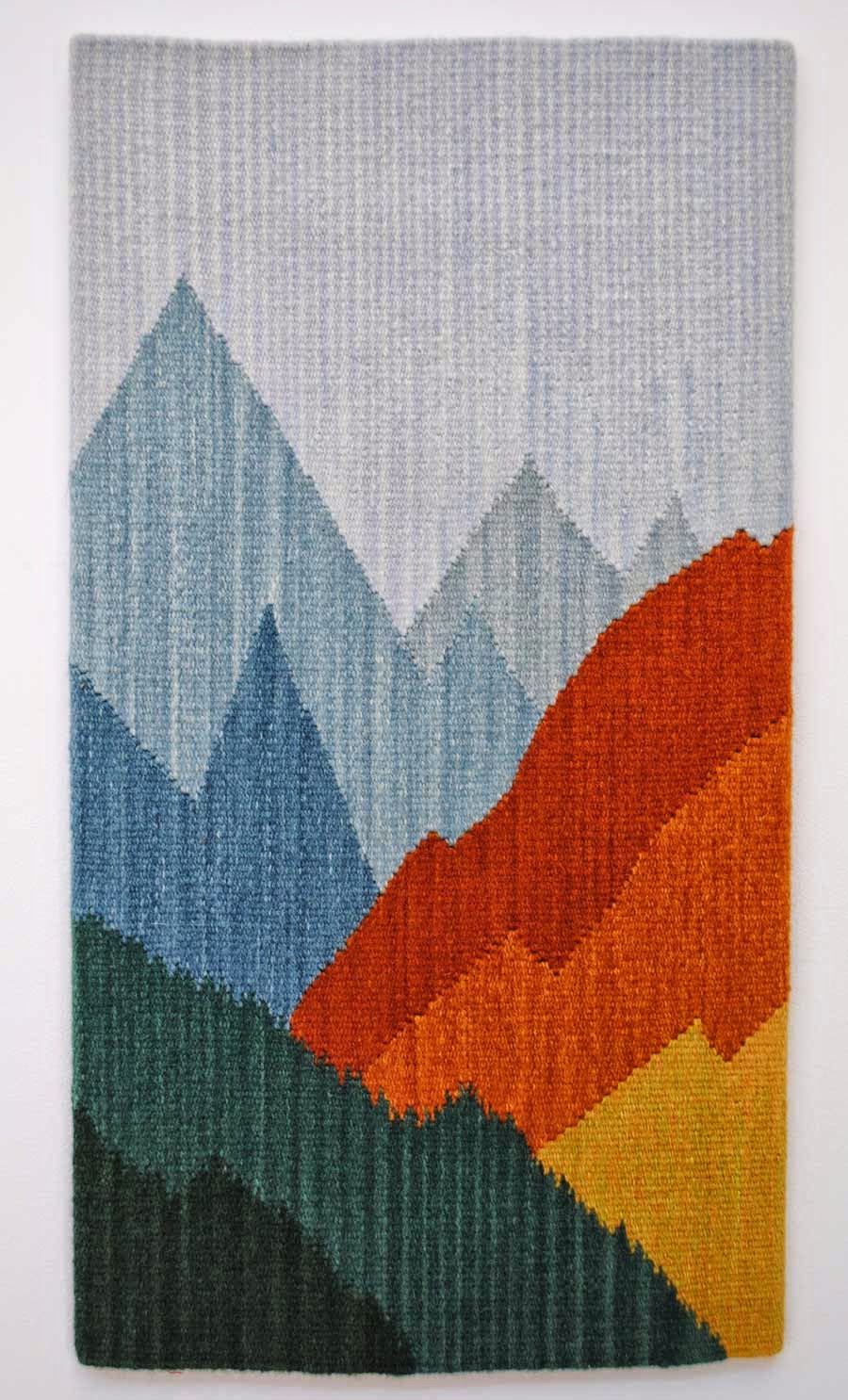
Sarah Warren, October Rain, 23.5 X 12.5 inches, hand-dyed wool weft on cotton warp

Barbara Brophy, Inspired by Rothko, 19 x 20.25 inches, wool weft, cotton warp

Kristin Saeterdal, Scared of the dark; Linda Giesen, White Sand; Anna Byrd Mays, BigPair

Dorthe Herup, Gundrun Elise and Burmann the ram II; Susan Iverson, Slow Passage

Susan Iverson, Slow Passage (detail)

Verona Szabo, Moment 1. 2. 3., Three panels each 23.6 x 19.7 inches, wool, silk

Joanne Sanburg, Home Sweet Home, 35 x 23 x 2 inches, wool, silk, cotton, and synthetic fiber on cotton warp, embellished with Japanese vintage bees, jewelry, crochet flowers, an old fly swatter, painted weft and woven (hat) straw

Joanne Sanburg, Home Sweet Home (detail)

Cornelia Theimer Gardella, Untitled #2 (Red, Blue), 26.5 x 40 inches, hand-dyed wool weft, cotton warp

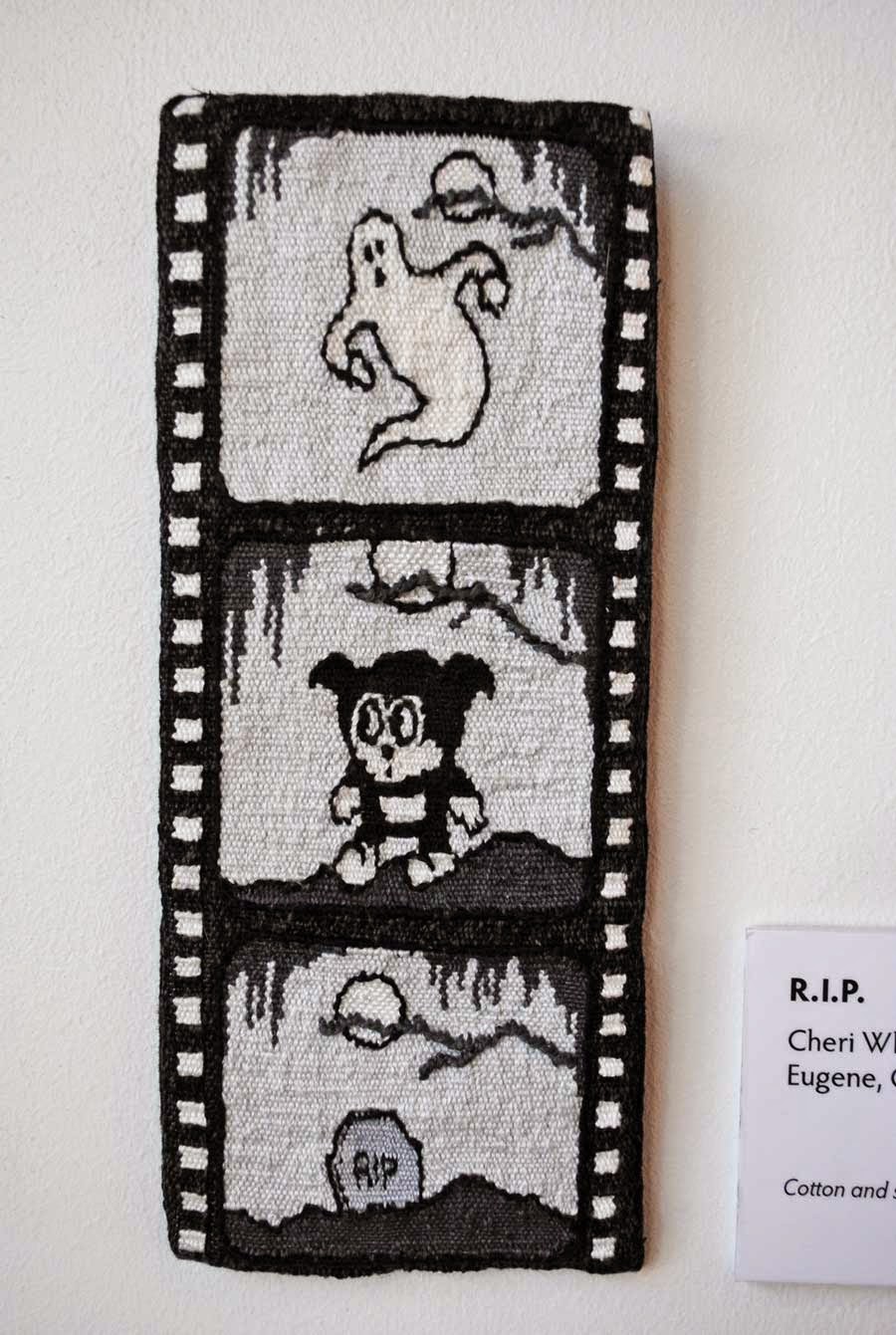
Cheri White, R.I.P, 9.75 x 4 x 3/8 inches, cotton weft, cotton polyester warp

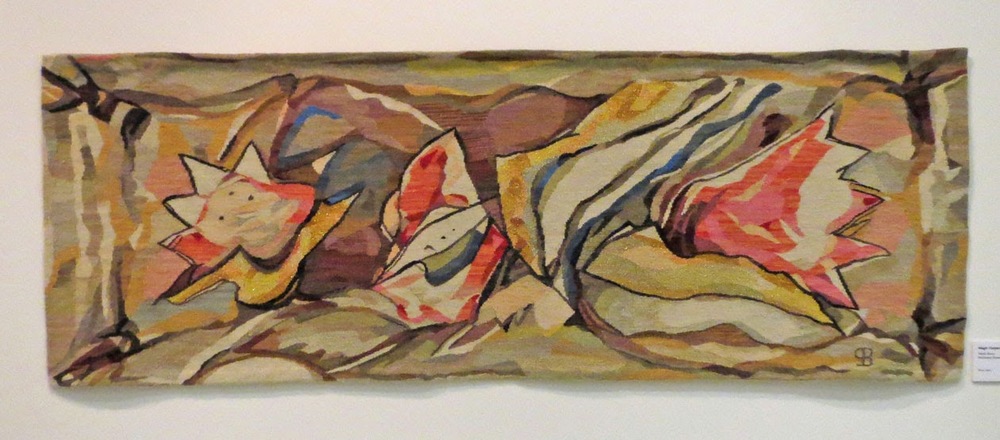
Don Burns, Autumn, 67 x 38 x 1 inch, wool, linen, silk, cotton

Sanda Bucur, Magic Carpet 2, 25.59 x 64.96 inches, wool, cotton

I took some photos of the show in the morning, sunlight streaming in through the clerestory and the glass brick walls. Then I went back after dark for Dr. Jessica Hemmings' lecture and I was take aback by how the yellow yarn in Lialia Kuchma's piece BlueRose looked like it was glowing neon. You can see it to some extent in the two photos below. In person the glow was striking.

Lialia Kuchma, BluRose, 64 x 71 inches, wool weft, cotton warp, Photographed in the morning with daylight in gallery.

Lialia Kuchma, BluRose, 64 x 71 inches, wool weft, cotton warp, Photographed after dark with entirely artificial light.

There was one piece that was accepted to the show but was damaged in international transport. Unfortunately it was not able to be returned to the USA in time for the show at the Kaneko. Here is that image.

Misako Wakamatsu, Complications, 112 x 52 x 2 inches, silk cloth & linen yarn

Please review my prior post about ATB10 for more photographs of the tapestries.

American Tapestry Biennial 10, San Diego.

Some of my favorites are shown there. The catalog for ATB10 is available through the American Tapestry Alliance HERE. Cornelia Theimer Gardella put the catalog together and she did a marvelous job.

Here is a very short video of the show.

I drove out to the college where Mary Zicafoose's solo show was... many miles and a Chipotle stop from downtown Omaha. The gallery was locked up, lights off. A kind office manager helped me realize that the postcard I was clutching hopefully in my hand which advertised the show did indeed state that it opens March 6th. Today is, after all, March 5th. It looked great through the windows though. I'll stop back tomorrow on my way out of town when hopefully it really will be March 6th.

Stay tuned for some images from the other fiber shows at Kaneko right now. Jon Eric Riis's work was the most inspiring--all nine large-scale tapestries.

A Chief Blanket-inspired tapestry of James Koehler's at the Denver Art Museum

It has been four years today since my teacher, James Koehler passed away unexpectedly at 58 years of age. I started a tradition of posting on the day he died and I think I shall keep it up. You can find the links for the last 4 years below including the post I wrote just after he died. I also wrote an article about him for the newsletter of the American Tapestry Alliance, Tapestry Topics. It is in the Summer 2011 issue which is now available for free on their website

HERE

Perhaps the best part of that article is all the voices of his students, apprentices, and friends.

I had the opportunity to visit the conservation department at the Denver Art Museum last month. We looked at some large 16th century tapestries that are being stabilized for the upcoming tapestry exhibition and then, when the class had dispersed, textile conservator Allison McCloskey pulled out the James Koehler piece that is in their collection.

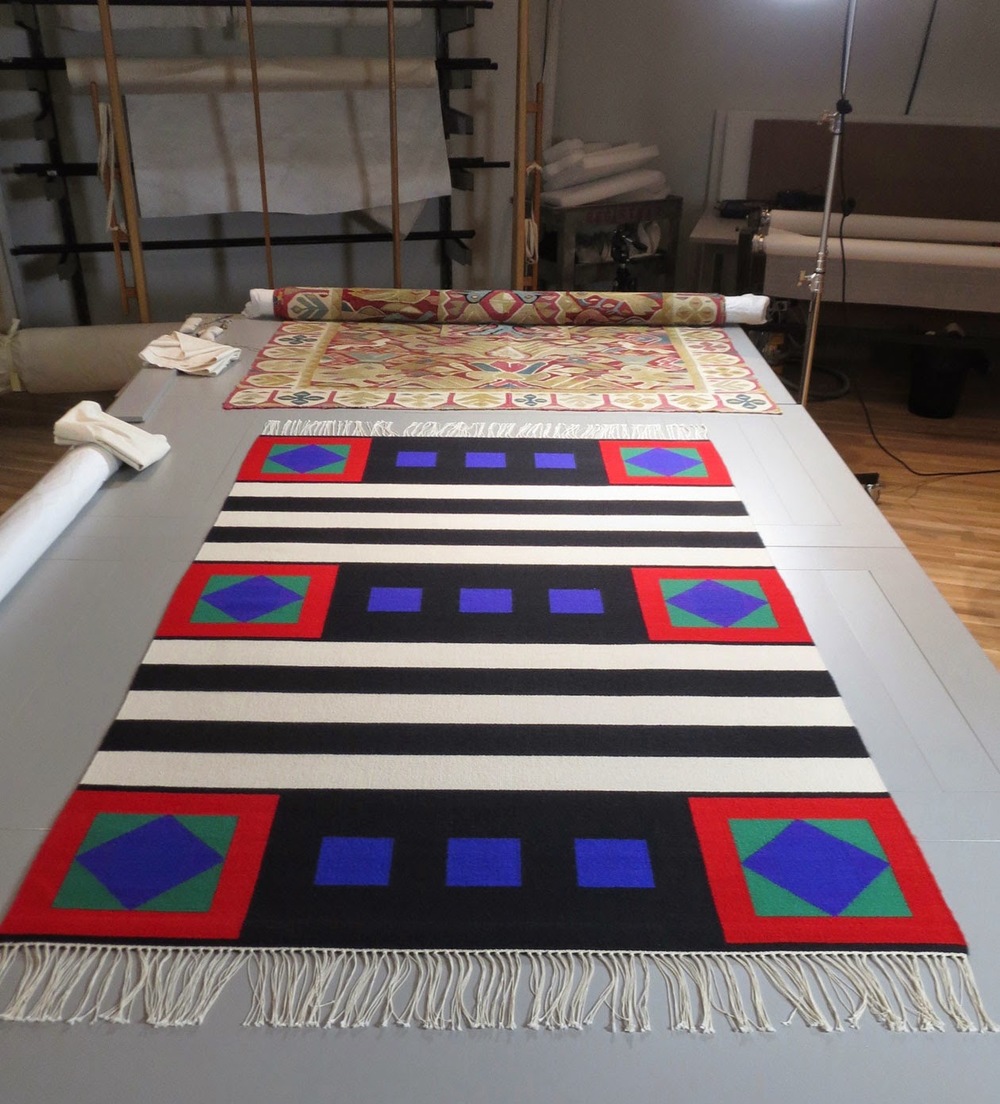
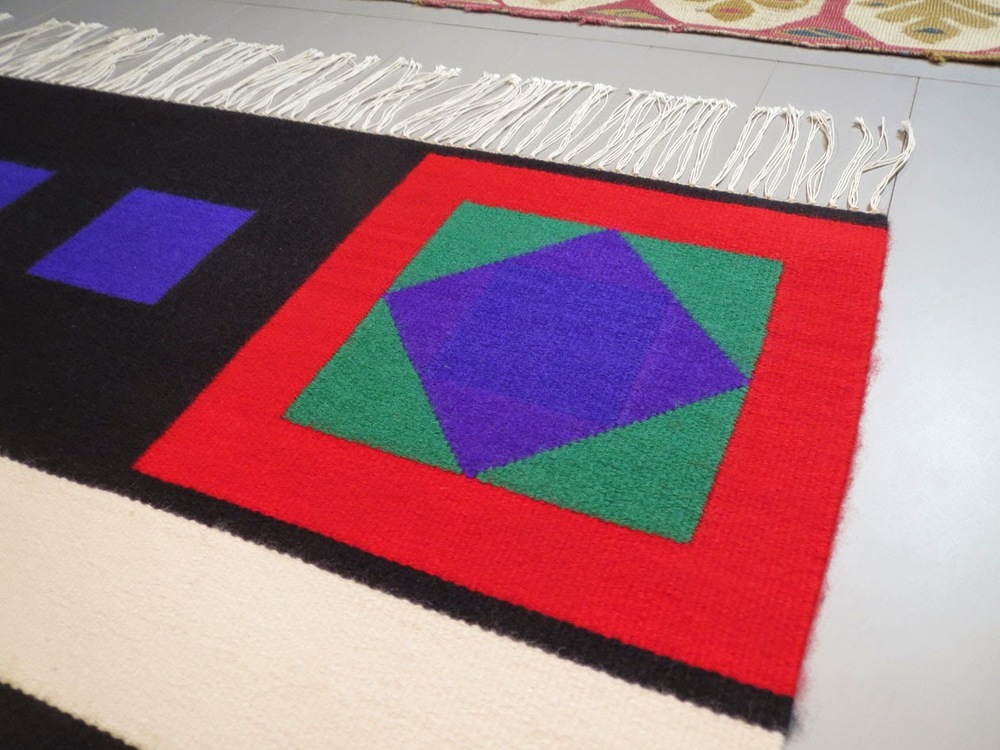
James Koehler, Chief Blanket piece, in the collection of the Denver Art Museum

He wove these chief blanket-inspired pieces before I knew him and I had never seen this piece before. But as soon as she unrolled it it was clear it was a James Koehler. His signature weft interlock join was there along with precise, unwavering craftsmanship. And the thing that made me chuckle and convinced me no one else could have woven this piece was something my camera was just able to capture.

James Koehler, Chief Blanket detail

He loved to put things together that you couldn't really see in every light. See the purple square in the diamond? From him I learned to tag my butterflies because the colors are too close to reliably decipher. But when you stand back and look at the finished weaving, you can tell the difference. I think life is like that a lot of the time. We can't see things up close that if we just got some distance from, would be obvious.

If you'd like to see what I wrote in years past, here are the links.

2014  

Three Years Passes in a Flash

2013  

James Koehler, 2 years gone

2012

 James and the cranes

2011  

James

You can now buy James Koehler's autobiography,

Woven Color,

on Amazon. It is a beautiful book and a well-told story of a journey lived in tapestry. 

http://amzn.to/1GKrNbT

 The book is self-published through Blurb Publications and you can also buy it directly from them.

James loved teaching. In his book he had this to say about that part of his career:

I want to continue to teach because the world of tapestry has enriched my life in so many ways. I want to pass on that gift to a new generation of weavers who are willing to learn from me. Tapestry weaving is an art form that does not get a lot of attention from the mainstream art world. I hope my work will help to change that…. [Tapestry] is an art form that enables people to enter into their own creative process where they can explore the medium and expand the possibilities that are inherent in it… I like to live my life from the vantage point of considering unexplored possibilities, and I am passionate about approaching my work in the same way. (Koehler 253)

I also love teaching. I didn't learn this from James, but I do understand it. I have been teaching various things since I was a kid playing school with my little sister, but teaching tapestry is the best thing I have ever done. When I look back at the last four years of my studio career, I sometimes indulge myself a little bit and think, "James would be proud."

Reference

Koehler, James, & Carole Greene.

Woven Color: The Tapestry Art of James Koehler.

Blurb Publications, 2010.

Using weft tension to make those warps behave...

If you asked me what the number one problem students have with tapestry weaving is, I would have to say weft tension. Warp tension is often fingered as the bad guy in tapestry weaving. We mostly want a very even bed of warps to weave our weft into. Most of us like the warp tension to also be tight. But an even enough warp tension isn't that hard to achieve. It is getting the appropriate amount of weft into that nice even warp that is the hard thing.

It is harder when you're new to tapestry weaving. But believe me, it is a gremlin that will always follow you. When you have more experience weaving, you just don't notice the gremlin any more. Experience means you adjust for changing conditions constantly without thinking about it.

I wrote a blog post about this with some photo examples last year. You can see that post here:

Weft tension: how to control the amount of weft used in tapestry weaving

Remember this example? The weaver called it her latest catastrophe.

I am happy to report that though this looks bad, it is one corner of a large piece and she fixed it. The finished piece is lovely and proves that you can recover from something like this.

Here is a video about weft tension. I made it for some students in my online classes, but thought the blog readership might also like to see it. As always, you can see the video in larger format on my YouTube channel (just click the YouTube icon in the bottom right corner of the video).

I got a little much-needed help with photographing a new sample for the next online class this week.