Tapestry Discovery Box

Weaving Sideways: When to turn your cartoon to weave a design "from the side"

Weaving Sideways: When to turn your cartoon to weave a design "from the side"

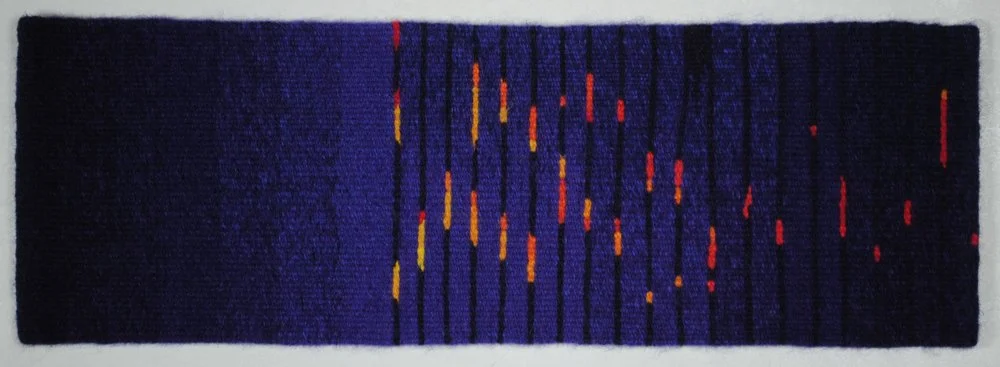
I am thinking about tapestry orientation* this week as the third Tapestry Discovery Box course is released. This class is called Sideways and I thought I’d take the opportunity to show a few of my tapestries where I chose to weave the design turned 90 degrees.

Horizontal lines or low-angled curves in tapestry are easier to make straight than vertical ones. There are only a certain number of warps per inch (8 epi is a frequent sett) whereas you can weave many more sequences in the horizontal direction. This influences how you create a tapestry design and which way you choose to weave it, as it will be shown or turned 90 degrees.

Frequently when creating a design I’ll change the angle of a line if I want it to be rendered straighter since steeper angles are stepped in this medium. So right from the design stage, consideration of what the important elements of a design are and what you’re trying to achieve with the image come into play.

Weaving eccentrically (the technique, not the personality trait)

Weaving eccentrically (the technique, not the personality trait)

I’ve finally made my first Instagram reel after years of resisting it and it did involve a fair amount of googling between the different software and platforms I was using. I have to admit that I did it in my video editing software, but it seems to have turned out okay. The reel (which is just a video on Instagram) is about the Tapestry Discovery Box that opens on Monday, January 15th. I’ve had such a lot of fun weaving the examples for this box. I hope you’ll join me for some tapestry play this quarter.

Weaving shapes versus weaving line-by-line

Weaving shapes versus weaving line-by-line

Some of you will be surprised that tapestry weavers weave a line at a time at all! There are reasons to weave this way and I spend a fair amount of my own weaving time using this method.

How do you know whether you should weave a shape at a time or line by line? There are reasons for both and the truth is that you’re probably going to use both methods depending on your design and the equipment you’re using.

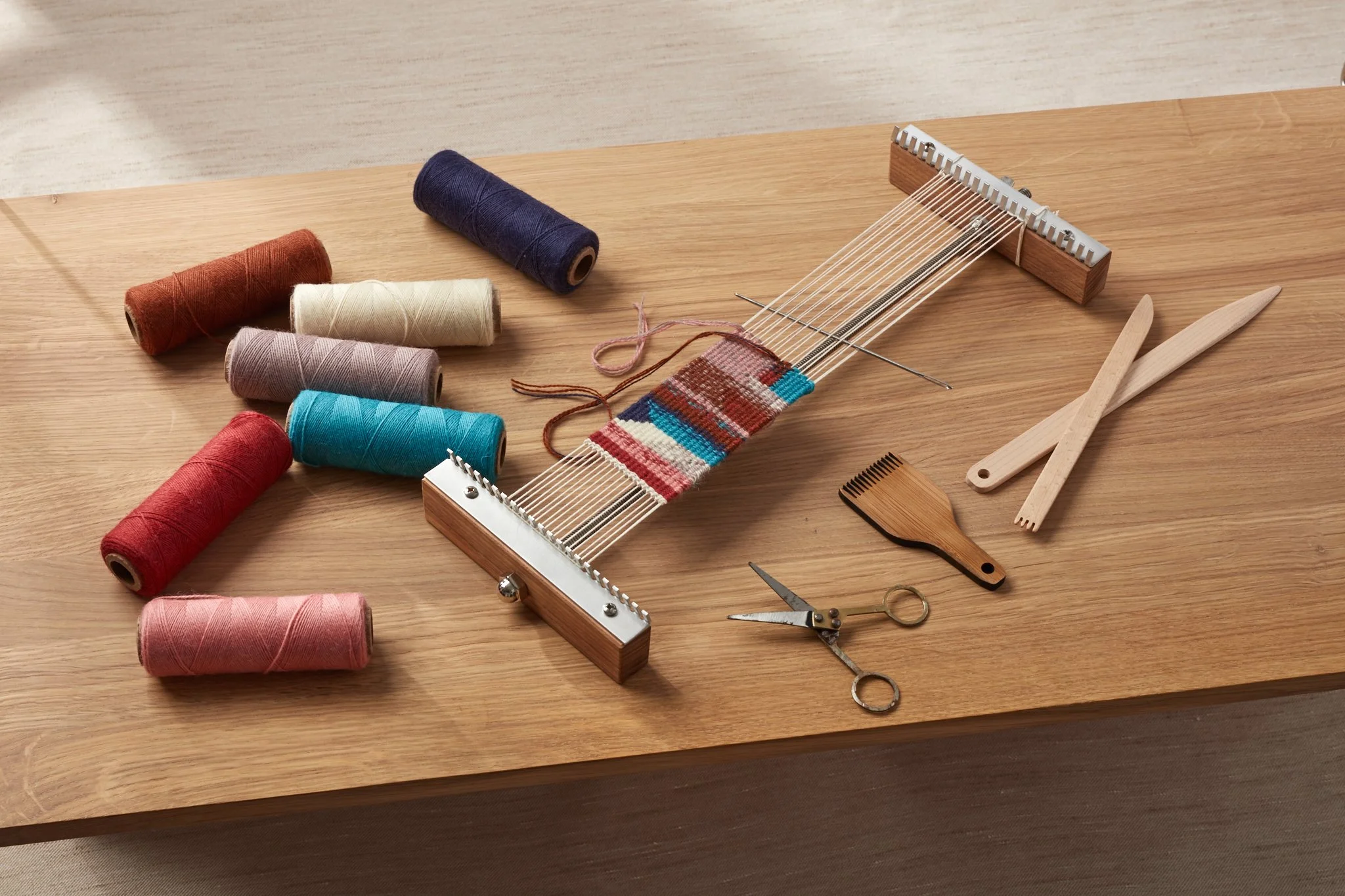
This is the topic of the Tapestry Discovery Box which opened on October 15th. The box is a collaboration between myself and Gist Yarn. Gist produces a lovely tapestry yarn called Array and every quarter they’ll send you 7 new colors of this yarn chosen by me along with access to an online course which uses the yarns to address a few tapestry techniques.

The Tapestry Discovery Box evolving community

The Tapestry Discovery Box evolving community

Over the last couple years I’ve been fortunate to find such a connection in Gist Yarn. This small yarn company based in Boston is all about yarn, weaving, and making connections among people. They’re operating principles include supporting diversity and sourcing their raw materials locally.

The Tapestry Discovery Box is a collaboration I’ve been working on with Gist for the last year. The first box went live in January. The boxes include Array tapestry yarn and a new course with a project from me shipped out every quarter. . . .

We’ve had so much fun in the first two boxes. Below are some of the work the participants have been creating.

The first box was about Openings. My example tapestry was of a door and window, but people interpreted the theme in many different ways. The technique we were playing with was weft bundling. I was amazed at the different color effects people got with the very same set of yarns.