Yarn

Yarn and color: using yarn color cards made with actual yarn

Yarn and color: using yarn color cards made with actual yarn

If I had an Olympic-level talent, I think we could all agree it would it is for collecting yarn that might be useful for tapestry weaving. I justify this to both myself and the IRS as an exceptionally important teaching tool. If I have some idea of at least some of the commercially available yarns out there that work well for tapestry, I can pass that information on to my students which makes them more successful in their learning.

One thing I love to have in front of me when evaluating a potential material is color cards made with actual yarn. Many companies use printed color cards and it is impossible to really know what color that yarn is until you order some of the it. In tapestry weaving, the color of the yarn matters a great deal and so yarn cards are a fantastic tool if they’re available.

I had the idea for this post when Gist Yarn sent me these beauties with their new Array tapestry yarn. These may be the most beautiful yarn cards I’ve ever seen. Turns out they do these for all of their signature yarns.
What tools and materials do I need to learn tapestry weaving?

What tools and materials do I need to learn tapestry weaving?

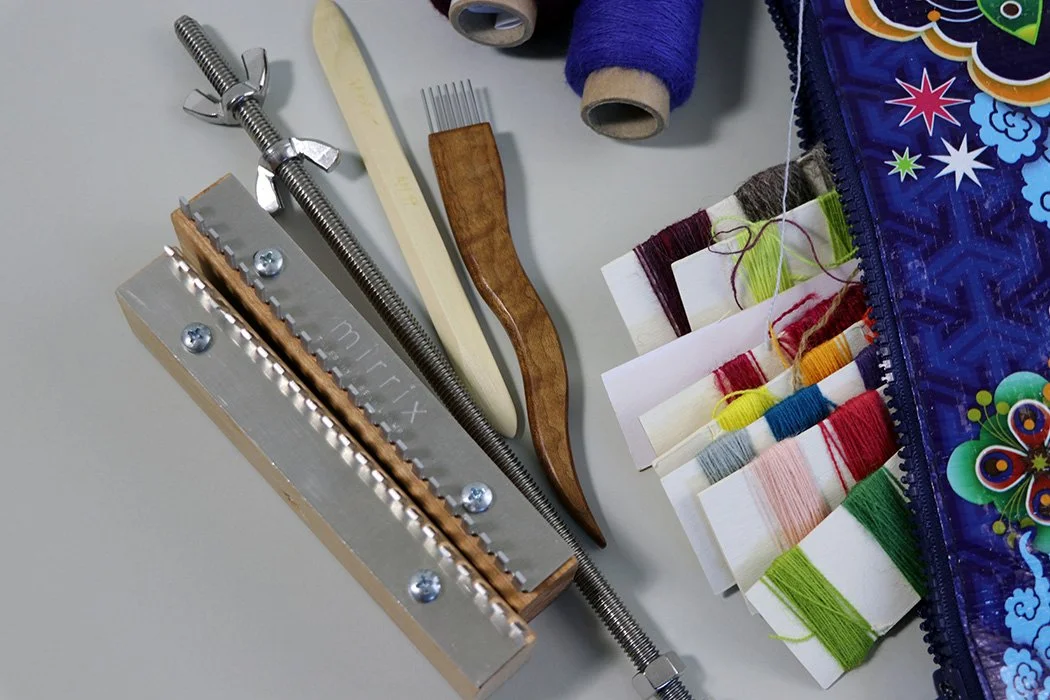
Learning a new art or craft can mean that you need to purchase some supplies. The hard thing is knowing what you actually need when there are so many options. Below is a list of equipment and yarns which I’ve seen be very successfully used by beginning tapestry weavers. Some people will use the same materials for their whole weaving career!

The surface of your tapestry: do those bumps matter?

The surface of your tapestry: do those bumps matter?

What materials you use for your tapestry will, to some extent, determine how much surface variation there is in your tapestry. I’m talking about the bumps you see when the strands of weft don’t quite line up.

If you use a worsted spun wool that is fairly smooth like weaversbazaar or Gist Yarn’s Array, you’ll find that you have slight variations in the surface unless you spend a lot of time lining up the yarns in your weft bundle. I’d like to suggest that these slight surface differences are just part of this medium. One of the joys of seeing tapestry in person is that you can experience these surface details and they add to the piece in most instances.

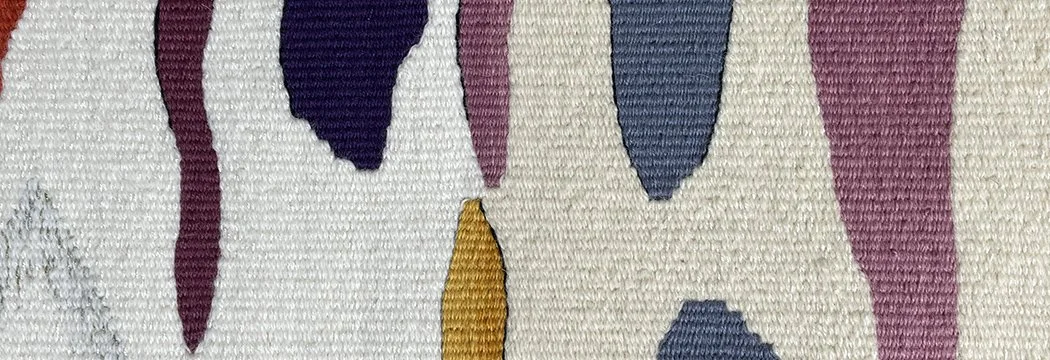
For example, I’ve been sampling Gist Array’s yarn versus my regular Harrisville Singles for a large tapestry. The background colors in the sample are wool and silk (unbleached and white in these photos). The colored bits are the yarns I’m deciding between.

A new tapestry yarn! Made in the USA.

A new tapestry yarn! Made in the USA.

GIST Yarn is a wonderful small company based in Boston. Started by the brilliant Sarah Resnick, it is a yarn and weaving company that values materials sourced in the United States. Sarah and her team are committed to supporting local agriculture, mills, and dye houses and their weaving yarns are gorgeous.

I have admired Sarah’s business for many years now and was thrilled when she asked me about a new project she was thinking about, a tapestry yarn made from US wool in a US mill.

If you’re a tapestry weaving, you know that there aren’t all that many yarns that come in a wide range of colors that include gradations. This holy grail of tapestry coloring, having light, medium, and dark versions of the same hue, only exists in a few yarn lines and none of them currently are made in the USA.

Questions from The Art of Tapestry Weaving: Choosing weft yarn

Questions from The Art of Tapestry Weaving: Choosing weft yarn

My book, The Art of Tapestry Weaving, is a tapestry techniques book. Published in November of 2020, I wrote it for my students and for anyone interested in tapestry weaving. I wanted to write a book that would become the reference that is always beside your loom. The book is quite comprehensive and I believe will be a great resource for beginners and more experienced practitioners alike.

There are always things that there isn’t room for in a book, even one that is 300 pages long, so I’m devoting some blog time to addressing frequent questions from readers of the book. I probably get the most questions from beginners about yarn. The video below was one that I did during launch week of the book in November and I think many people missed it because it was part of the launch.

The time-saving magic of a few simple records (and the yarn I don't remember dyeing)

The time-saving magic of a few simple records (and the yarn I don't remember dyeing)

I’ve been working on a design for a new large format tapestry. At this point I’m still calling it the “rock piece” and it is fortunate that I have been using that term in my notes in various places for years because that consistency allowed me to unravel a little mystery last weekend. I’m pretty set on the cartoon for this piece and have even enlarged it full scale as I consider final color selections and potential ways to realize this idea. Seeing it full scale allows me to really see what the forms will be like when woven and gives me another opportunity to play with the design if I want to change it. Most of my decisions will have been made by the time I start weaving.

What is the best way to use a skein of yarn? Put-ups for tapestry and other yarn activities.

What is the best way to use a skein of yarn? Put-ups for tapestry and other yarn activities.

Yarn comes in many forms. If you saw the video I did last week about making yarn balls, you’ll realize that there are different ways your yarn might come packaged. Many of those forms are usable just as they are, but one particular configuration is almost impossible to use without transforming the yarn into a different shape, the skein or hank.

How a yarn is packaged is called put-up. That just means that it comes in a skein, on a cone, on a tube, in a cake or ball, or wound on a card. The image and gallery below shows those various put-ups.