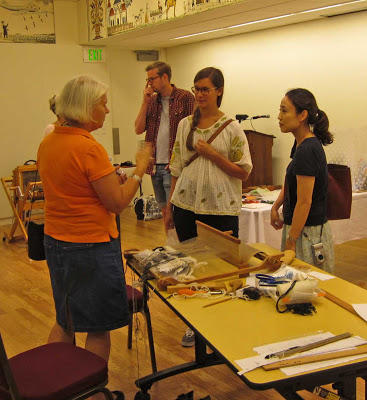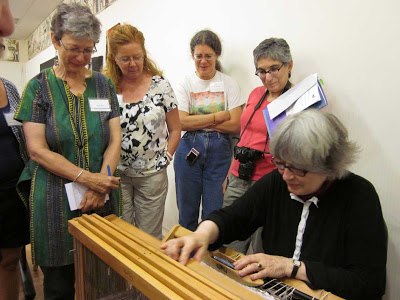
Tapestry workshop looms

I have been teaching workshops in a variety of places recently, to guilds, conferences, and smaller shops. Each has their own challenge in terms of looms.  I frequently get questions when posting photos of student looms on my blog. People want to know what others are using and why. Here are my feeling about tapestry looms for workshops. Keep in mind, these are just my opinions and you undoubtedly have your own reasons for what you use... as does every tapestry teacher out there. When I am in my own studio, I weave tapestry on a Harrisville rug loom. Most of us have a small loom we use for carting about and those are the looms I want to talk about.

A tapestry loom has to hold a high tension. A loom you are working on in a workshop is no exception. If you start with a poor tool, you won't be encouraged by your results and won't want to continue working in tapestry. Using a good loom to learn on is important. Tension is one of the biggest issues.

Rigid heddle looms: My issue with most rigid heddle looms is that, in my experience, most of them do not hold a good tension. The shedding device (the rigid heddle) works fine for weaving tapestry, but the tensioning mechanism is usually poor. Many of these looms have a "beam" on each side which just doesn't tighten enough. That said, I have had a couple rigid heddle looms in my classes that worked far better than I expected them to.

Table Looms: I used to have a LeClerc Dorothy loom which my grandmother gave me. It was meant for weaving fabric and actually had 8 harnesses. The beams were tiny though and I couldn't ever get it tight enough for tapestry. I have found that most table looms have this problem. I have seen looms that do work fairly well for tapestry in this category. In the Michigan (Michigan League of Handweaver's Conference) class I taught this summer, one of the students makes looms with her husband and their table loom was not only beautiful, it worked quite well for tapestry. You can see Bruce and Ann Niemi's looms at www.kessenichlooms.com.

A loom that a blog-reader recently asked me about was the LeClerc Penelope II. This link is to a vendor's website. LeClerc has a website but it is exceedingly clumsy (so go to that link at your own risk--you have to download PDFs to see what they sell, though LeClerc does make excellent looms). I have never seen one of these looms in person, but from this photo and the description, I feel that this is basically a table loom tipped upright for weaving tapestry. If you've tried it, let me know!

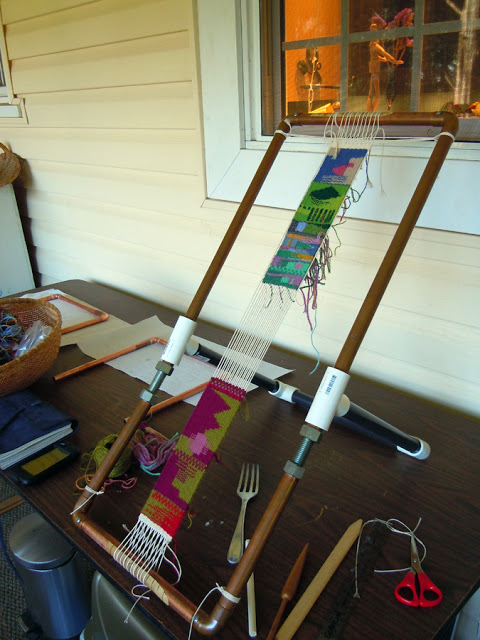
Archie Brennan pipe looms: These looms show up at almost every workshop and if you want to make your own loom, I recommend the design. Archie has offered the design for these looms for a long time. Here is a link to a place you can order one disassembled or get diagrams for making one.
Archie Brennan pipe loom diagrams.
These looms are made of copper pipe and use threaded rods for a tension device. People use various methods for standing them including Tommye's solution here. I have seen people use inexpensive painters easels also to hold the loom. Of course some people just lay them on their lap and against a table (perhaps not the best ergonomic solution however).
Photo Source: Tommye Scanlin's blog
Another tapestry weaving friend of mine, Jane Hoffman, makes her own copper pipe looms and has made her own shedding device so she doesn't have to use leashes or pick a shed.


The loom below is one that a student brought to the last workshop I taught. The loom is not labeled. Does anyone know what it is or who makes it? It had a beam system for tensioning, though the teeth on the beams were large and I didn't feel like it got a tight enough tension. It used leashes for shedding. The advantage of a loom like this is that you can put on a long continuous warp.

I don't work for Mirrix, but for my money, it has become the best tapestry loom out there that you buy ready to weave on. These looms are pretty much bomb-proof, super sturdy, infinitely tightenable (if you don't loose that little wrench they send with it--seriously, keep track of that!), and come in a wide variety of sizes. I believe Elena and Claudia originally designed this loom for beading, but it quickly became apparent that tapestry weavers were going to love it. The shedding mechanism is easy to install and works smoothly. You can put on a warp that wraps around the loom and rotate it for more length. It uses a spring at the top (and now at the bottom if you choose) to space the warp evenly (yes, you need to take the spring at the bottom out after you have woven a few inches so that you can advance your work).
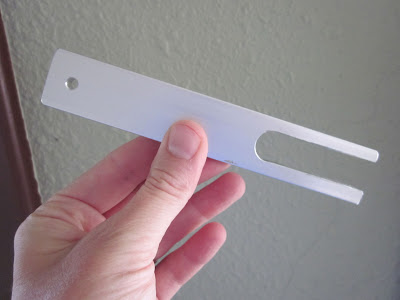
This is the tightening tool for a Mirrix loom. It is extremely handy and you should not lose it... though I'm sure you could buy another if you did.
I recently read this blog post by Janette Meetze about a recent tapetsry workshop she taught. I looked at her photos and realized everyone in her class was using a Mirrix. I emailed her and turns out she has a stash of them that she uses for teaching. It is an interesting idea to have a set of little looms for teaching beginners. Of course my current house/studio combination being quite small, I think my partner might have my head if I decided to invest in a fleet of new looms. Perhaps one day though.

What workshop loom do you like to use?
Salida Fiber Festival

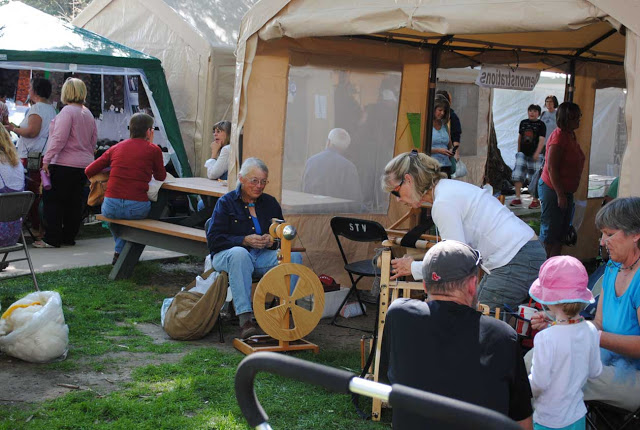
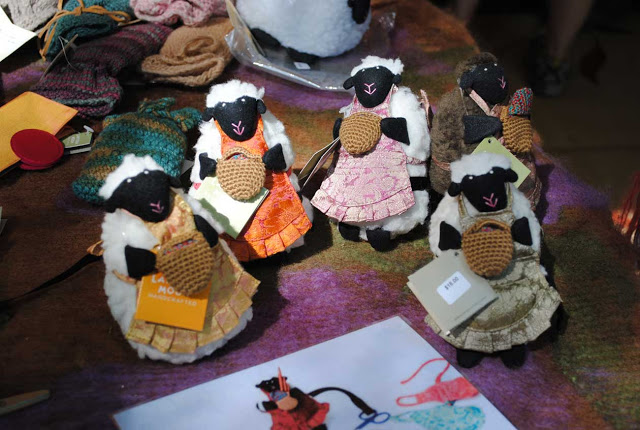
Yesterday, though I had to work at my "moonlighting" job in the morning, I was free by noon and took a trip to Salida with my family for the first annual Salida Fiber Festival.


 Brooks Farm Yarn from Lancaster, TX was there. I always see them at the Taos Wool Festival and in the past I have succumbed to their beautiful wool and silk blends. I went back three times, fingered the yarn, imagined what great things I could knit with it, and believe it or not? I didn't buy any. I couldn't. I already have a couple skeins in the closet waiting to be knitted and the stash couldn't hold any more. Maybe if I get it out and knit fast I can get some in Taos in a few weeks.


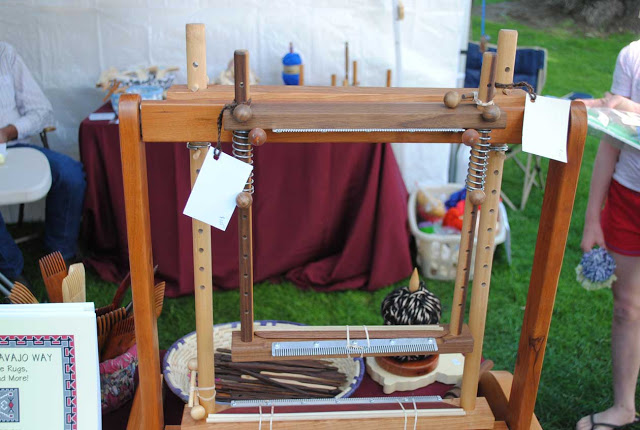
 Woods Canyon Woodworks, the makers of the cactus flower loom were there. I have never used one of these looms, but I have had students who have and really like them. One day I will buy one and try it myself.
 Salida is a wonderful but small mountain town about an hour and a half north of where I currently live (Alamosa, CO). I didn't have high expectations for the first year of a new fiber festival, but it was a wonderful event with a lot of vendors and many people buying yarn. I think they'll be back next year!

This is my favorite store in Salida, Fringe. Penny carries yarn, fabric, and a lot of very cool fun stuff. Her booth was fun too.

 Lots of fiber...

And people spinning...
 But sadly, no animals to pet. Penny says next year.
They did have a wine/beer garden and a vendor selling deep-fried things that smelled heavenly but were decidedly not gluten free.

Here is my niece being supervised by my brother-in-law and checking out a Schacht loom for sale. She didn't quite seem interested enough in the loom for my taste, but she is only 7 months old. And later at Amicas while I was eating gluten free pizza, she was playing with the tie on her bootie in such a way that I am SURE she is going to be interested in fiber.

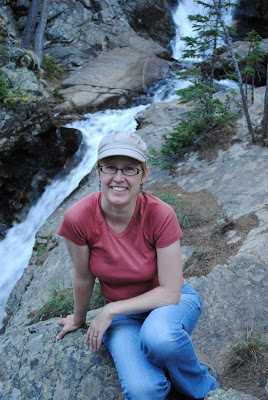
After the festival we climbed to this great waterfall in the Collegiates. We earned that pizza!  (Though the flourless chocolate cake might have been a little over the top.)


Today I did not get any weaving done either. Instead, I went south and hiked to Duck Lake. I didn't see any ducks, but did see a lot of cows. The lake was beautiful and all the hiking this week has made me feel a little better about the changing leaves.


The need for cupholders

Some days Emily suggests that I get a mini-van. This suggestion seems to be coming more frequently these days. I think it has to do mostly with looms and the transport there-of, though I'm not completely certain about this. It might be that she is just fed up with my little manual transmission Volkswagen Golf. She (the car) is 13 years old now and just turned over 234,000 miles. She has a few issues. The air conditioner is touch and go. As we currently live at high altitude in Colorado I am toughing that one out until next summer (just in case). The antennae for the radio fell off years ago which can get a little frustrating when the only station that comes in is that station that I'm sure teenagers love but I'm just too old for... or Focus on the Family radio. They must have strong signals because NPR NEVER comes in. The locks pretty much don't work (until they do and I set the car alarm off), and the squirter on the back window has emptied the contents of the washer fluid reservoir onto the ground when you turn it on accidentally for about a decade.

The very worst problem though is that the cupholder broke. This happened a few months ago spilling a large soda all over my lap. And I ask you in all seriousness, what good is a car without a cupholder?

So the mini-van isn't a horrible idea, though I have always reserved them in my mind for soccer moms. I completely understand why if you have four kids you need a car with a big side door that opens magically with a remote keychain, a flat floor that is easier to vacuum the cheerios off of, and a long distance to the backseat so you don't get hit in the back of the head quite as often by flying bits of soccer gear. After all, minivans get relatively good gas mileage considering how large they are, they have seats that come out resulting in a large cargo area with a flat floor which would be great for looms, yarn, and other weaving-related items. The slider doors would be fantastic for accessing the tubs of teaching materials or the wet dog, and if I got a newer one, I bet it would have a cupholder. What I'm worried about is that a minivan is definitely not cool for a young(ish) artist... but then is weaving tapestry really cool anyway? Maybe it is a lost cause.

At any rate, this is what is happening in the Southwestern USA right now...

The Hatch green chili is out in huge burlap bags in the grocery store parking lots. And the chili roasters are going ALL the time.

I hiked up to twelve thousand some feet on Sunday and was disturbed to find this:
I know I go through this every year and every year it is traumatic to me. My list of hikes to be completed this year is hardly touched and the snow will fly within the month most likely. The high country will be inaccessible to me by Thanksgiving (no, I don't want to heli-ski or learn to telemark). But winter brings it's own time of growth and I will soon be looking forward to the spring again. Plus the changing leaves are very pretty.

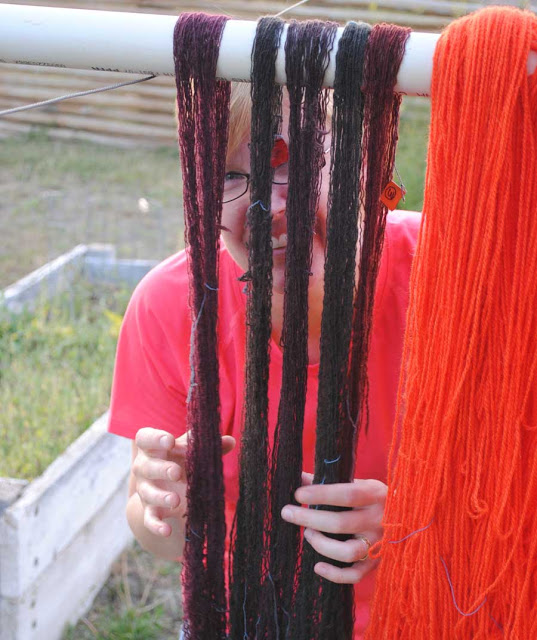
And I am still dyeing yarn.
Sometimes in the rain. (Yes, this yarn is white. It was drying after scouring a large batch. It will be colored soon enough.)

But the best news is that I was able to start a new tapestry yesterday. It turns out I don't hate the LeClerc tapestry loom as much as I thought I would and the little tapestry is coming along nicely. It is so good to weave again. Since I just took a new part-time job in which I have to drive a fair amount, lets hope that (1) the Volkswagen doesn't shit the biscuit, (2) the job is enjoyable and leaves me more time for weaving *it should*, and (3) I figure out a way to fix the cupholder because I am really going to need it.


In which I am up to my eyeballs in technology.

You know you may be a little too busy when you find yourself reading "An Introduction to Telehealth as a Service Delivery Model Within Occupational Therapy"* on the toilet as a way to get your professional development updates in somewhere.

I am not the most tech-saavy person, though I do try hard and I get by with a little help from my friends (okay, a lot of help from my friends--yes, I had the Beatles album Sgt Pepper's Lonely Heart Club Band when I was a kid, but no, I'm not really that old. I was a 15 year old stuck in a 40 year old's world for awhile). Somehow this week I am getting a grand education in all things web-based.
  • A website migration (this might take awhile--I use Squarespace and they have a great new platform and I want to use it, but it takes some learning for me to get the new stuff figured out... fortunately for me, Squarespace is great at those little videos where you look at a screen and someone is talking and the little arrows click on things and you can sort of do the same thing on your screen)
  • Some new teaching products  (new websites, new concepts in creating online forums... etc)
  • Use of a real newsletter mail server in which people who want to hear from me can just sign up and I don't have to manually manage a whole lot of email address... which will keep gmail from getting too mad at me also
  • Learning iMovie for making videos for teaching (actually using the video camera itself was a bit of a challenge and I lost all the video from my sister's baby shower and that is really quite horrible as I promised to send it to many many people, but I'm better now. I haven't deleted anything important in the last few weeks and I even made a video of my niece in which she is adorable and I hope my sister will forgive me one day)... 
There is a big learning curve on a lot of these things, but with the help of some people smarter than me and a little swearing, I am going to come through it without losing my marbles.

In other technological news, my little Canon Elph camera is giving up the ghost. I am really sad about it, but she has stopped writing reliably to the SD card. I will admit that though I bought the camera  exactly 2 years ago just before going to Germany for the Bauhaus project, she has taken tens of thousands of photos and I suppose that is all you can ask for a camera that cost just north of $100. I haven't brought myself to order a new one yet, but I know it is imminent.

All this is my reason for not weaving anything at all recently (well that, a wedding, a month-long trip, and the fact that I just can't love the LeClerc Gobelin loom like I love my Harrisville Rug Loom.  I have tried, but I feel like I'm in 7th grade again when I'm trying to use the vertical loom... awkward, gangly, and full of acne.)

At least I'm getting some yarn dyed--mostly when the really really bad internet we have out here in the boonies absolutely refuses to work. I plead and dance around the modem and promise it kindness and that I won't stream anything offensive, but it frequently balks and sends me back to the dye pot. Perhaps that is a good thing.


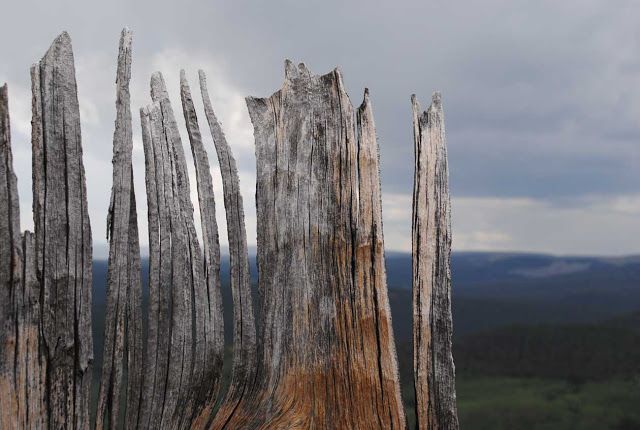
Boot Mountain Bristlecone (great Sunday field trip!)

*In OT Practice, April 23, 2012 (I'm a few months behind). It is the issue with the superhero on the cover. I have given up on the REAL professional journals--those would be the articles in the journal without pictures with pages of references at the end of each 30 page article. I don't have that much gut trouble.

A day in Taos, NM

 
Yesterday I took a day trip to Taos (which really isn't so far away after all). You see, I have a sort of "temporary life" which has become somewhat permanent. But the original idea was that my things were only going to reside in the climate-controlled storage locker for a few months, half a year at best. It has been most of a year now and they may languish there a bit longer. So I have returned to that point in my life (which I experienced a decade ago when I was a traveling OT and swore I would never go back to) where I make pilgrimages to my stuff which is in a Butler building (albeit air conditioned) behind a flimsy garage-type door. Oh, the security of the storage unit is quite good and I have little doubt no one will want to rummage through my piles of book boxes and loom parts, but I do miss that stuff... especially the Harrisville Rug Loom.

Honestly, I have tried and tried to love the LeClerc Gobelin loom I have in my current studio, but it just isn't the Harrisville. The LeClerc has excellent tension and it is beautiful and it tries hard to make me happy, but I miss the vertical loom and the overhead beater and the warp tensioner on the back of the Harrisville. I may have to rent myself a truck and rescue her from lock-down, though Emily may make me sleep under the loom if I bring more stuff into this tiny house!

At any rate, the trip to Taos came off well. I managed to find the last of my stash of undyed student yarn (Harrisville Highland) so that I can get that ready for the next class. And we visited some of my favorite Taos spots...


There was, of course, Moby Dickens, the excellent independent book store in Taos.

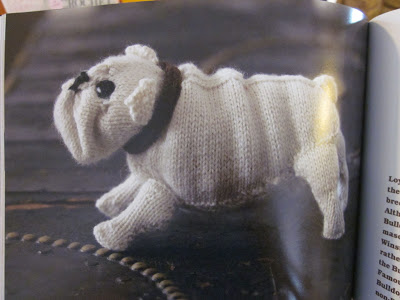
This book was fascinating. I almost took it home with me, but put it on my Amazon wish list instead. (I use the Amazon wish list so that my family gets me things I actually want, but also as a marker of things I need to get in the future. Perhaps on my next trip to Moby Dickens this one will come home with me.)

I thought this pattern was particularly hilarious--the English Bull Dog. My grandparents had them when I was a small child and I remember that they weren't particularly smart or able to walk well or cuddly... but they loved them!

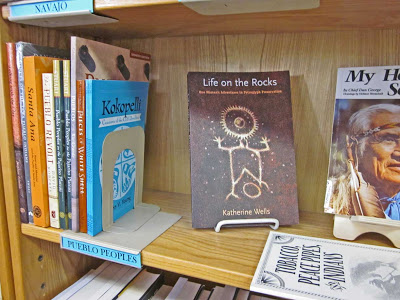
And this book was displayed on the New Mexico shelves. Life on the Rocks was written by my prior landlady, Katherine Wells and I highly recommend it. It is about her work with the petroglyph project she has established in northern NM. It is also a fascinating autobiography of someone who ended up in rural New Mexico. I had the privilege of living on her land among the petroglyphs for three years. Katherine is a good writer and the book is fun to read.

I had an emergency stop at The Yarn Shop. Fortunately, though they carry few knitting needles, they had the number 6 double points I needed to finish a baby hat in the car on the way home. I found myself swearing one too many times at the short needles I started the hat with on the way south. New needles had to be had. I do miss Taos Sunflower though!

 Cassy modeling the finished hat (before blocking mind you) in the car on the way home.

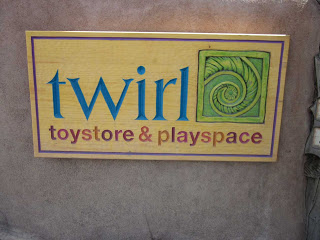
I stopped at the toy store, Twirl. I love this place. The kid in me can't resist touching everything. I'm sure they hate that. (And Emily would be correct to give me a squirt of hand sanitizer when leaving.)


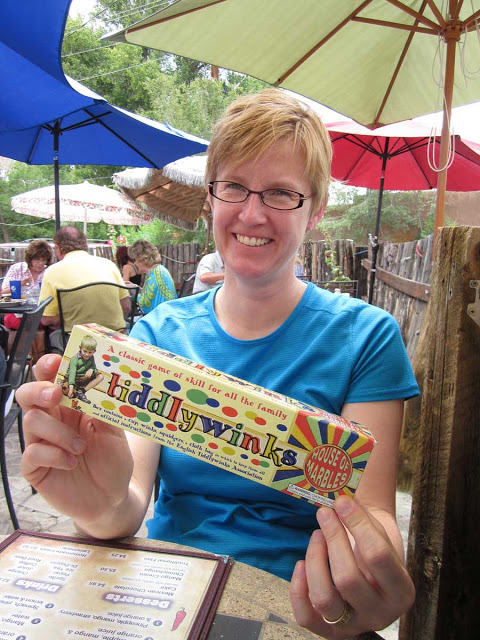
I came home with this toy. I had Tiddlywinks as a child and with the excuse of my new niece, I can buy toys again, right? Clearly this toy is not for a 6 month old, so I must have gotten them for myself.

(We were having lunch at La Cueva. I highly recommend this place with excellent Mexican food. Most things are gluten free and they know what you're talking about when you ask about gluten.)

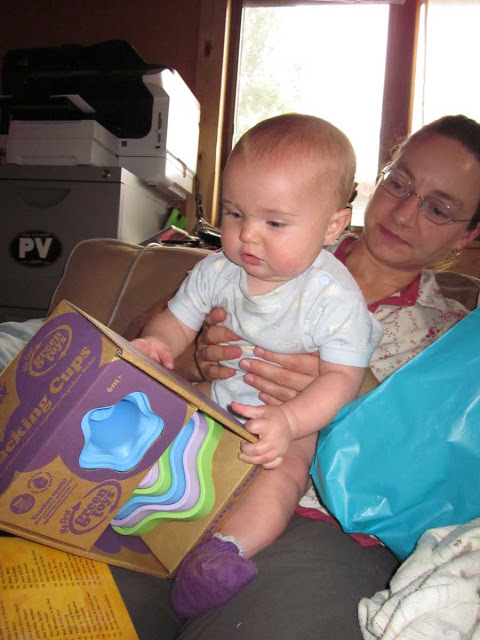
Here is the real reason we went to Twirl--she got her stacking cups though she might have preferred to play with the bag.


I do like Taos. I'm sure I'll be back soon... to visit the Harrisville loom if nothing else.

View of the Cumbres & Toltec train on the way down.

Pacific Portals and video viewing

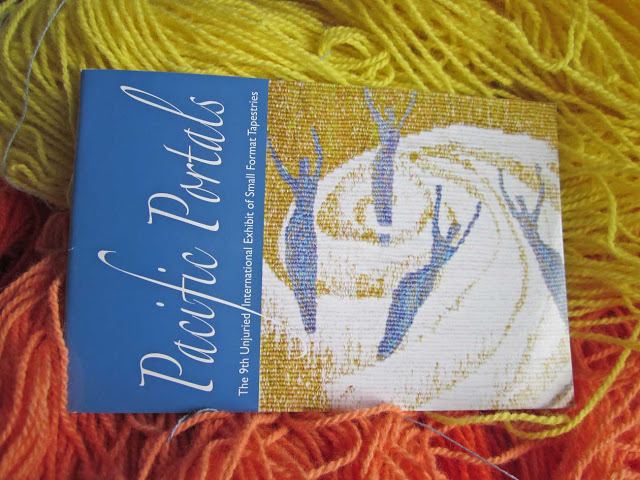
Here is a link to a video of the entries in the Pacific Portals small format exhibit at Convergence 2012 in Long Beach, CA. I was unable to attend Convergence this year and was glad to be able to see the exhibit in this format. I got my copy of the catalog from ATA last week, but seeing the pieces in a video format helped me better envision what they were like.


(This is the first time I've tried to actually imbed the video on the blog. If it doesn't work, use the link here:
http://www.youtube.com/watch?v=gv29EJRLezo&feature=em-share_video_user)

A big thanks to Debby Thompson for making this video and posting it for us all to see. The combination of the catalog and the video made the show much more real for me. I still wish I could peer at the tapestries from a foot away, but perhaps next time.

The Pacific Portals catalog can be purchased from the American Tapestry Alliance on their catalogs page linked here.


Perhaps video will be a new way to see artwork for the times we can't travel. It certainly helps the spatial experience of something like tapestry which is not completely flat (and often not flat at all). Any thoughts on this?

Helena Hernmarck, In Our Nature

I have tended to call the work I do 'Decorative Art,' with a European understanding of that term. My feeling is that there is still room for this art form which is developed to fill a need and has some clear limitations within which the most suitable solution is found.
--Helena Hernmarck 

I had the opportunity to take a tapestry workshop from Helena Hernmarck at the American Swedish Institute in late July. To attend this workshop, we had to apply and be accepted by Helena. She let me in despite my picky-flat-tapestry-weaving ways. I think she even called what I do Gobelin tapestry! (I thought no such thing, but also have have never been to France.)

The class was given in conjunction with a large exhibition of her work, In Our Nature. The show was phenomenal. If you live anywhere near Minneapolis, please go to see it before October 14th, 2012. There are four large tapestries there borrowed from museums which we were not allowed to photograph. Seeing only those four would be worth the trip from just about anywhere in the USA or Canada. But in addition to that there are many more tapestries displayed throughout the ASI facility. The museum pieces include Poppies, 1978 and Bluebonnets, 1979.

Here are some pieces from the show. Folk Costume Details is owned by ASI and you can go and see it any time in their beautiful new building.
Helena Hernmarck and Bruce Karstadt, director of ASI; Folk Costume Details and sample
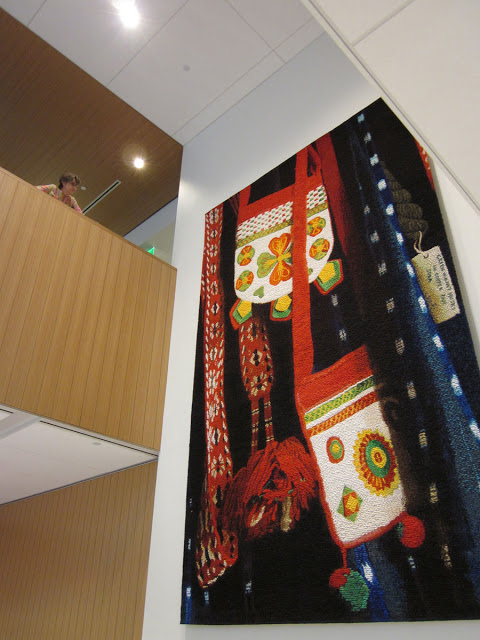
ASI still had the large "sample" Helena had woven for Folk Costume Details and I caught them holding it under the finished tapestry. The tapestry was reversed from the sample in the final weaving. Notice the person on the balcony above for scale in the photo below.


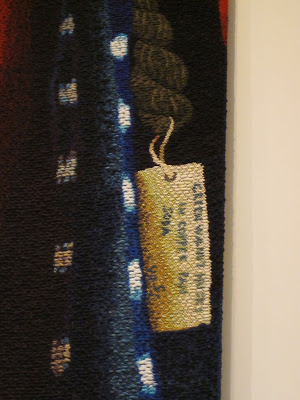
Folk Costume Details is monumental (woven in 2006 at Alice Lund Textilier, it is 15' 4" x 9' 7"). Note the detail of the tag below. Under that that is a photograph of the assemblage of items similar to that which she took the photograph that the tapestry was woven from. Helena works from photographs and goes to great lengths to get the photo right before translating it to a cartoon. Sometimes she uses photographs others have taken including professional photographers, sometimes she takes the shots herself.


Part of the realism of Helena's tapestries is created in the viewer's brain. This concept has always fascinated me. From a viewing distance, the face of the woman sitting on the bench is detailed. But look at the detail shot below.

On the Dock, 2009
The actual detail in the weaving is not there, but we see a woven face when we look at the tapestry from farther away.

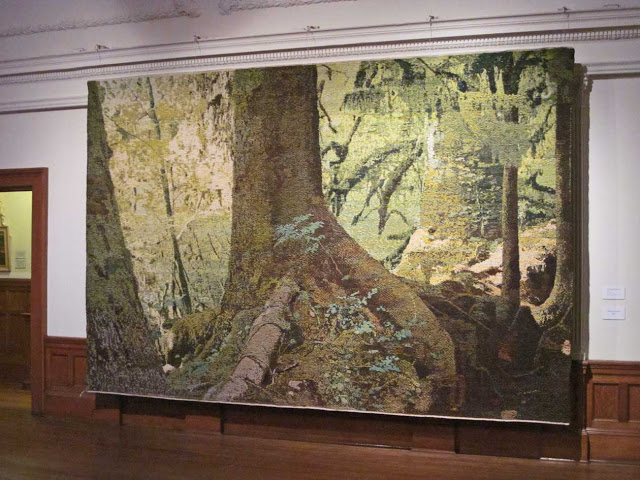
Hoh River Valley Rain Forest, 1971. 110" x 168"
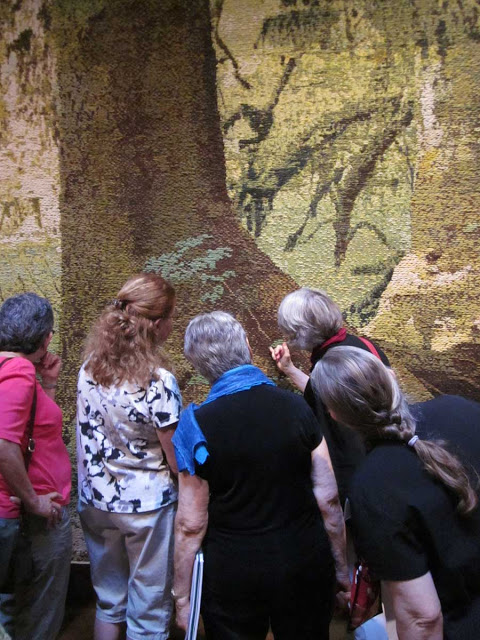
The class spent a lot of time looking at the tapestries in the show. We had the distinct advantage of being able to try the weaving technique, go upstairs to look at examples of Helena's use of the technique, and have the master herself there to answer all our questions for three whole days.


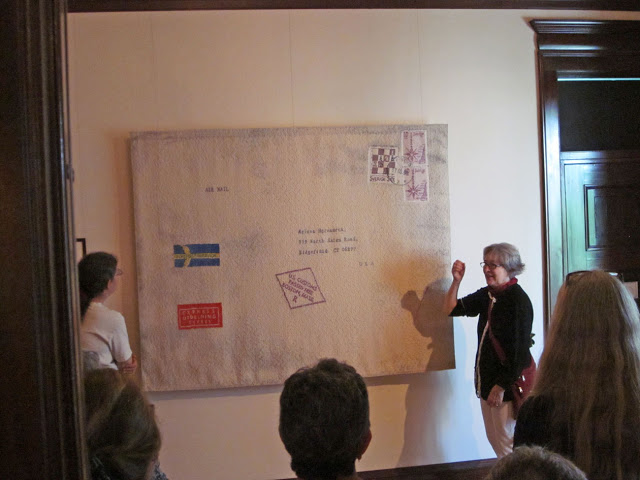
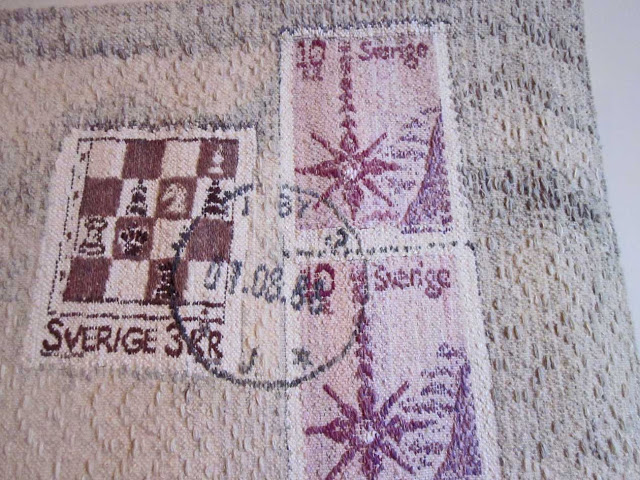
I love this piece. I think what I love the most about it is that Helena went to great lengths to weave this envelope exactly as she received it in the mail including faulty typewriter H's and dirty smudges.

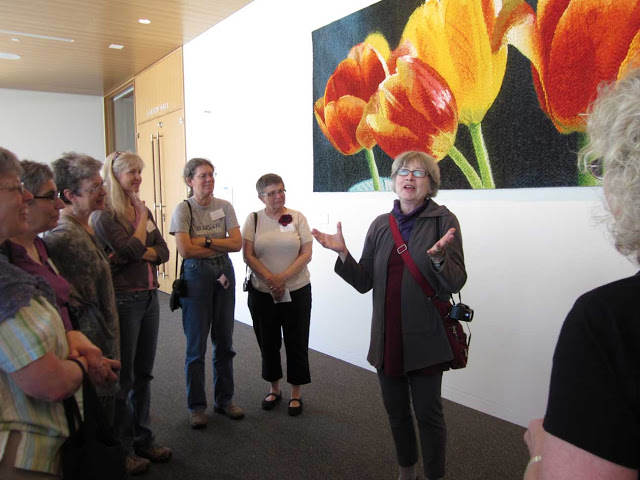
Helena talking about Envelope from Sweden, 1992. 60.75" x 75"
Detail of the stamps which are beautiful and probably 24 inches high. (?)  Unfortunately I was busy admiring another piece and missed her explanation of how she did these stamps. I think there was a warp spacing change, but I am not sure.


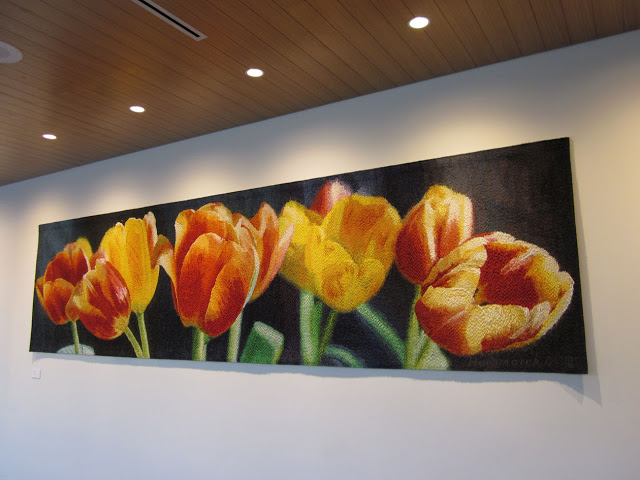
The depth in this tulip piece is amazing. Helena is a master of making parts of her images look farther away, and one way she does this is making part of the image fuzzy or out of focus. Seven Tulips is a good example of this.
Seven Tulips, 2004. 4' 10" x 18' 6"

Helena gave us all kinds of details about the process she uses in her work. I could have talked to her forever. She is energetic, engaged, and completely fascinating.


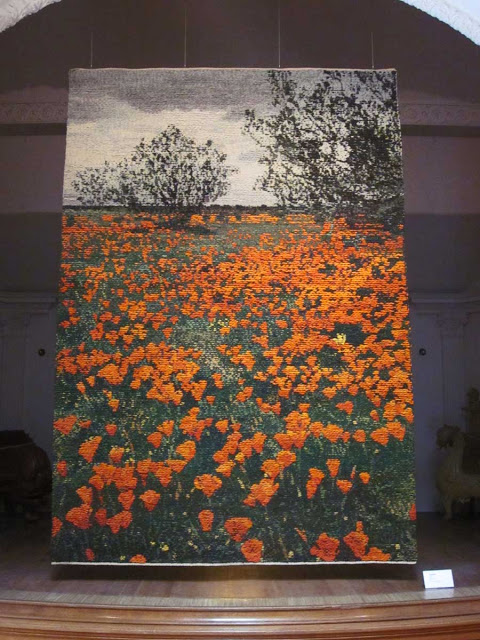
I kept coming back to look at this piece, Poppyfield. The sense of depth was uncanny, but from up close it just looks like little blips of color. Even with a photo, if you squint you feel like you are falling into the weaving.

Poppyfield, 1974; 120" x 84"
The opportunity to study and even touch these wonderful tapestries was incredibly valuable. (Okay, the only one I actually got to touch was the sample from Folk Costume Details, but still, it was quite a rush.)

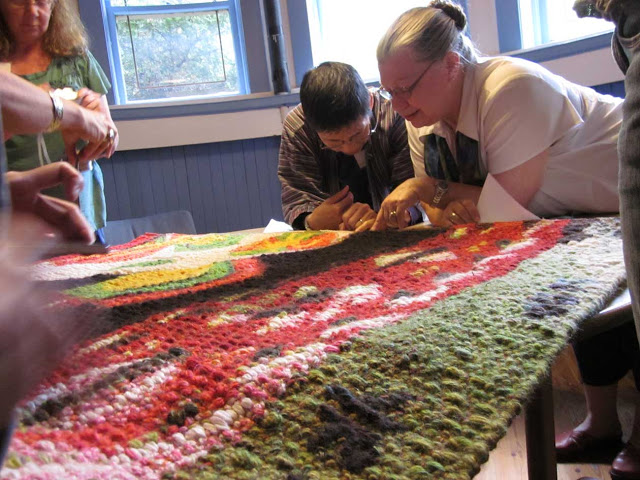
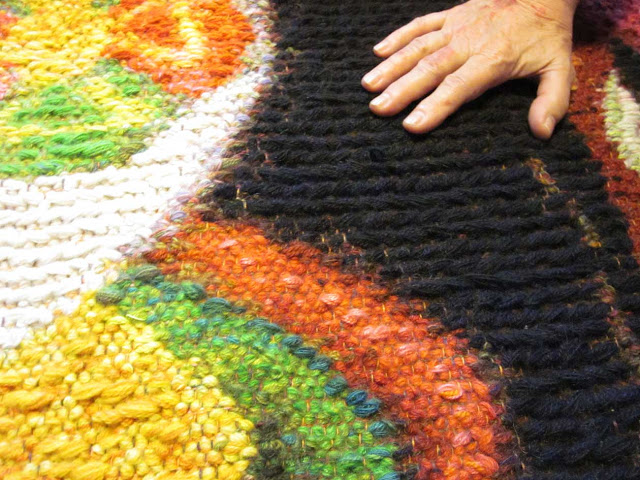
The hand of the tapestry-maker and a detail of the weaving technique on the Folk Costume Details sample.
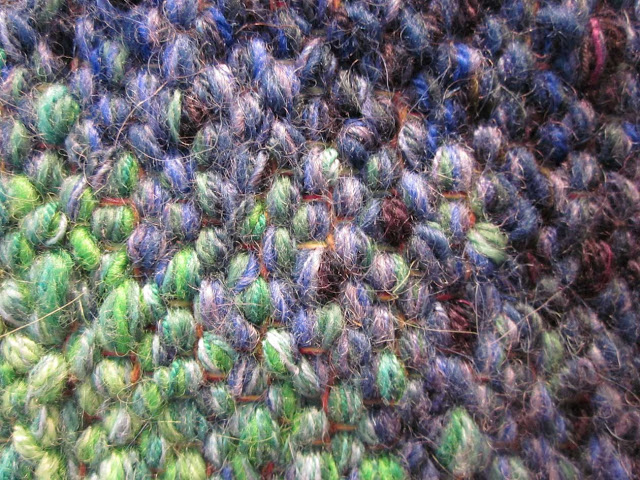
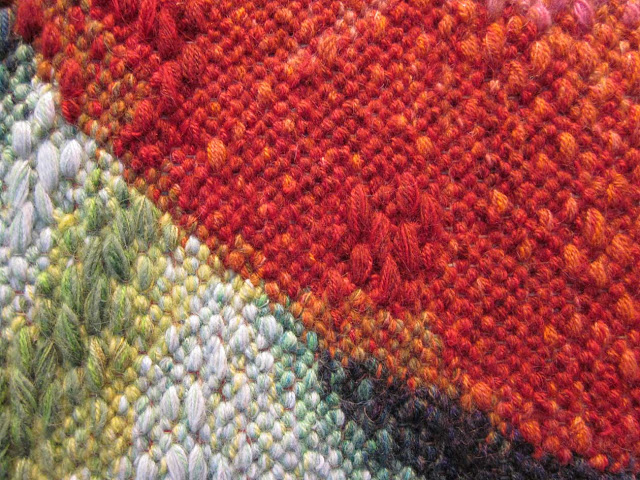
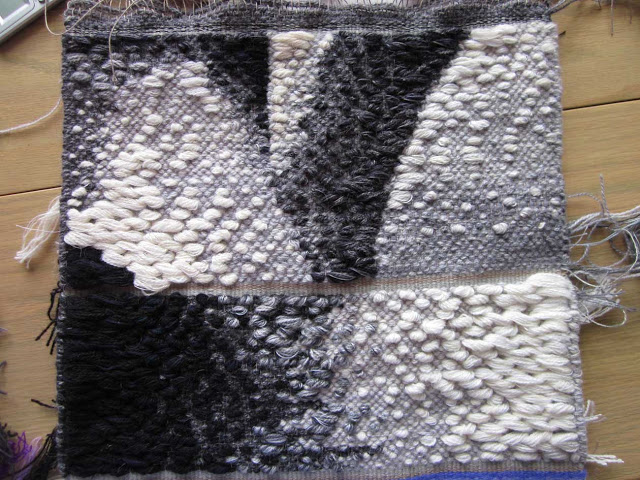
Here are a couple details of the weaving itself. Helena's technique involves two tabby shots, some linen stabilizing shots, and a pattern shot which creates the floats and lends depth and texture to the work. She uses colored warp which does show. The colored bits give the pieces a certain spark and aliveness. Helena's signature creation of depth is created by a combination of all these elements plus her ability to translate photos into colored yarn.


Most of Helena's large format tapestries are now woven at Alice Lund Textilier in Sweden. We were fortunate that the owner of Alice Lund, Frida Lindberg gave a presentation on Saturday evening complete with photos and history of the workshop. She has a blog which she has just started publishing in English (yeah!). This post about the weekend includes a photo of my sampler, the last photo in the post. Here is a small photo of Frida (center) and to her right, Tamako Takahashi, one of the weavers who worked on Folk Costume Details and many other Hernmarck pieces.


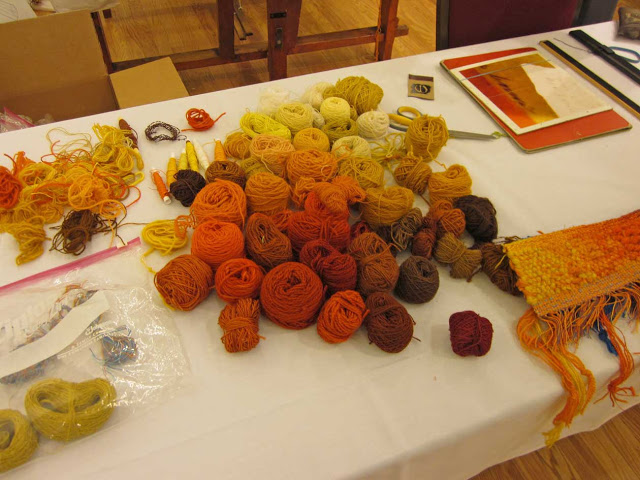
Helena's yarn comes from Walstedts, also in Sweden. She spends time there every year getting the colors right before they dye the yarn for her pieces. Here are the color cards for one of her large pieces (may have been Folk Costume Details).


Here is Helena and I with a part of a sample she cut up to give to the class. It was great to go home with a little piece of her work and something to look at the actual technique on (besides what we wove ourselves). She is holding the photo of the tapestry that the sample was from. (Technically it wasn't a sample. She started the piece and didn't like the colors, so she cut it off and started over. It is comforting to know that even Helena Hernmarck starts over sometimes. I think the piece was Tabula Rasa.)


Helena was a wonderful teacher. She was patient and never stopped answering our continual questions.


In Our Nature also included work by Team Hernmarck, a group of students she has been teaching in Sweden. This group included two Americans (Joan and Winnie) which was how she was persuaded to teach in the USA. Four of the members of Team Hernmarck were assistants for our class. I can't thank them enough!
Annika Soderstrom, Jean Haglund, Helena Hernmarck, Winnie Johnson, Lis Korsgren--our talented teachers
I enjoyed talking to Lis a great deal. This piece was beautiful and really had a great sense of depth. I also loved her technique of creating a border that was comprised of a toned version of the central image. All of the Team Hernmarck weavers (there were at least 16 of them) had pieces in the show.
Forest with beech trees, Lis Korsgren
We had three days to learn Helena's technique. We wove in black and white so that we could focus on how to do the technique and get the most contrast for the creation of depth. I came to the workshop armed with the requested linen, wool, and cotton yarn in a greyscale. You can see my post about dyeing some of the yarn for this class earlier in the summer HERE. It was the Vevgarn I used though there isn't a photo of the greyscale. I also purchased pearl cotton in 10/2 and 16/2 linen also in greyscales. I was glad I had. The yarn was beautiful and fun to work with. I hadn't realized we weren't going to be able to work with color, so first chance I have, I will be weaving in this technique in color to see what happens. All that red, after all...

My sample on the loom.

Cut off the loom and showing the gradation and the tulip detail sampler we did.

Here was a grooping of yarn arranged in a gradation which Lis and Helena were using to demonstrate a piece of an older tapestry Helena had done.


I learned a great deal at this workshop. It was a great privilege to be able to work and learn from Helena Hernmarck. If I am very very lucky I will get to do so again one day before too long.


My interest lies in capturing the image of a fleeting moment in the sustained and time-honored process of tapestry weaving.
--Helena Hernmarck