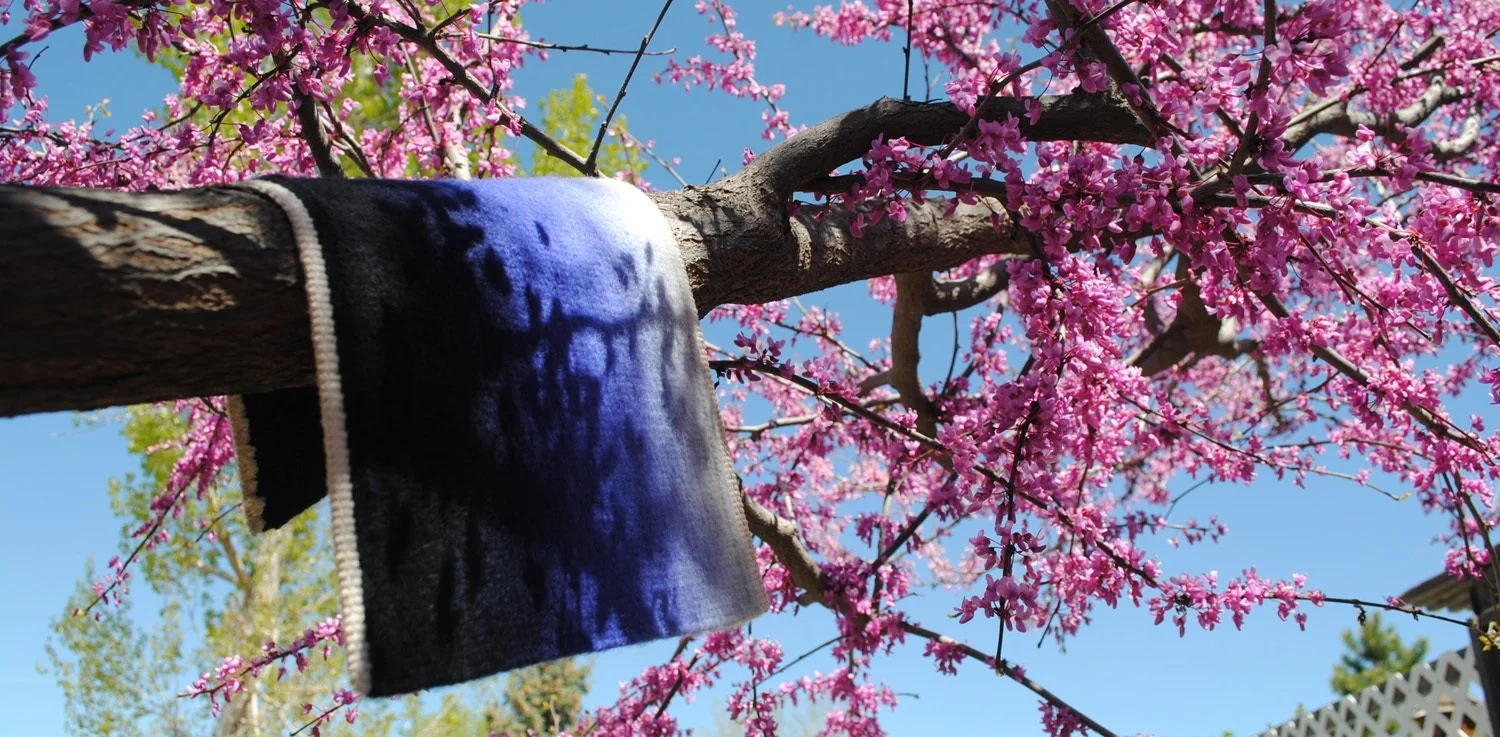
Rookie mistake

I've been dyeing for a long time--over a decade. I use acid wool dyes, sabraset and lanaset dyes from Earth Guild and PRO Chemical and Dye. They are the same dyes, they just have different trade names. And of course the colors are slightly different. For some reason, the last time I did a lot of dyeing, I decided that I was going to start using just one company, PRO Chemical and Dye. I guess I thought it would be easier and a little cheaper to source my dye from one place and I was using Deb Menz's dye books and formulas for some of my experiments and she uses their dyes.

However, this led me right into this weekend's rookie mistake.
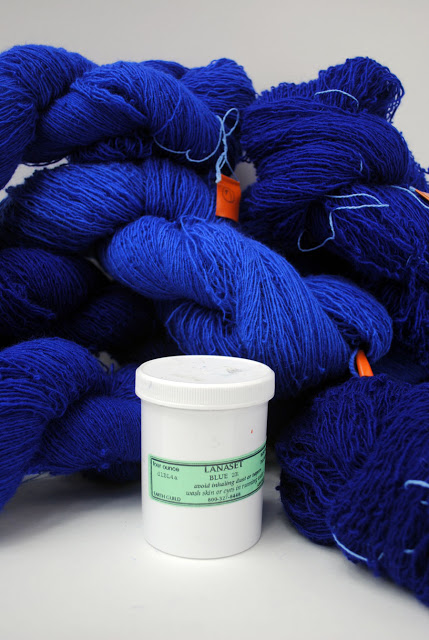
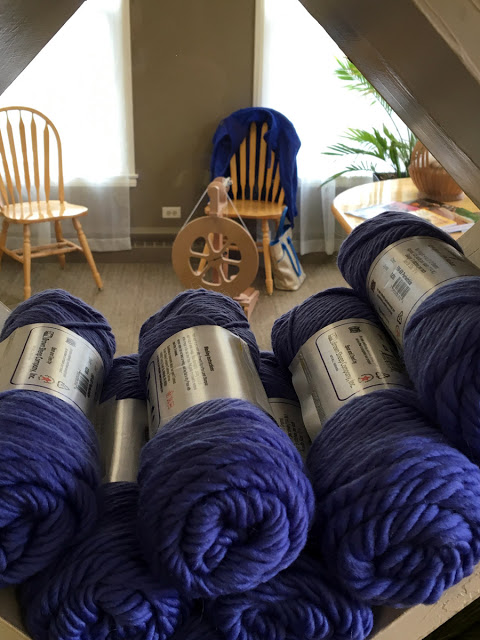
That beautiful blue yarn is made in part with Blue 2R, a dye made by Earth Guild. I have been using this lovely dye for a decade. I love it. Why would I abandon it?

I started dyeing the blues for the next tapestry late last week. As I began measuring the dyes for the first eight colors, I started to panic a little bit because the jar was almost empty. Searching through my two small boxes of dye powders, I realized there was no new jar.

No. New. Jar.

Then I remembered the aforementioned clearly delusional decision to stop using Earth Guild dyes.

I realized I had enough for the eight colors, and thought, oh great, I'm going to make it!

Only to remember that I had nine more blues to go for this piece and there was no way any other dye could be substituted.

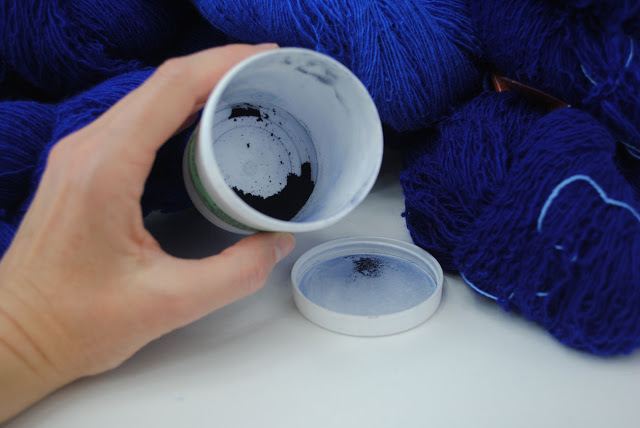
And this was all I had left.
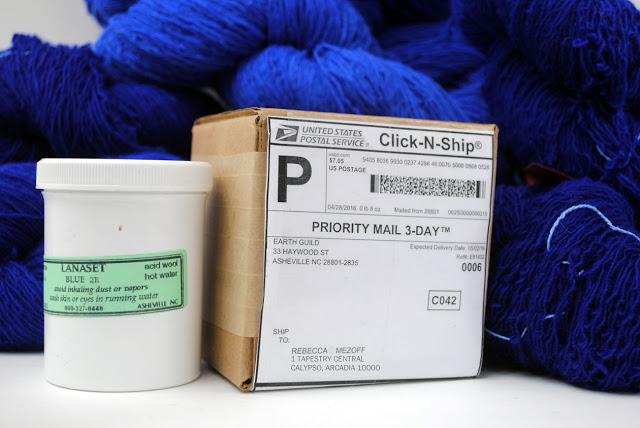
Thankfully Earth Guild was fast. Yesterday this little box was on my doorstep and I'm off to dye the rest of the blue.
In penance I promise to continue to use Earth Guild's Blue 2R for all eternity... or at least until another delusion steps in.

Thanks Earth Guild.
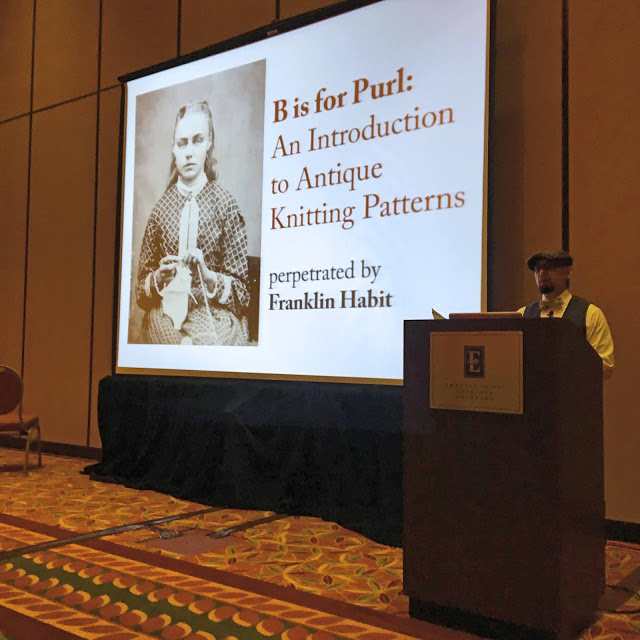
Yarny things including sheep, antique knitting patterns, and bagpipes

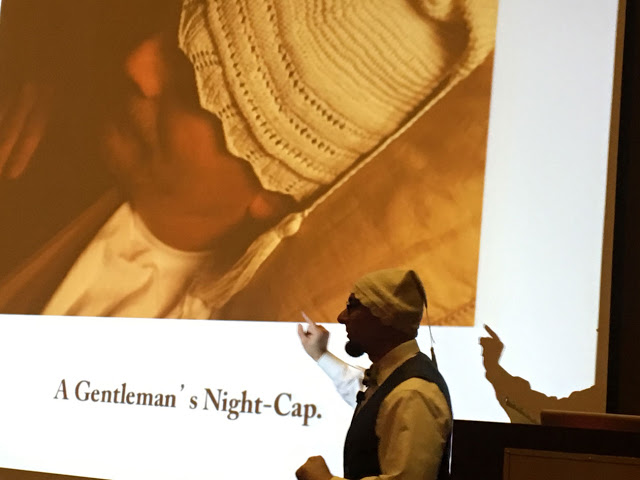
Last week I had the pleasure of hearing Franklin Habit speak at The Loopy Ewe's Spring Fling. Nope, I wasn't a Flinger (how do you join that club?) and though I sat about 10 feet from Franklin which gave me plenty of time to contemplate whether hipster garb would work for me (I think not), I did not see the Yarn Harlot, my hero. I saw evidence in photographs that she was around, but I did not find her. I am pleased to say that Franklin was an excellent substitute.

Franklin was wonderful in fact. His talk was about antique knitting patterns. He promised at the beginning that he would get us interested in this particular rabbit hole of knitting lore and he almost succeeded in my case.
I did go home and buy his book, It Itches. It is a hilarious collection of cartoons and thoughts about knitting and definitely worth a read.

And he finished off with a lovely night cap pattern. What an enchanting evening, complete with pocket watch.
Fast forward to last weekend...

Saturdays are a good time to run errands--especially when your errands include two yarn stores, one of which is having a fleece day.

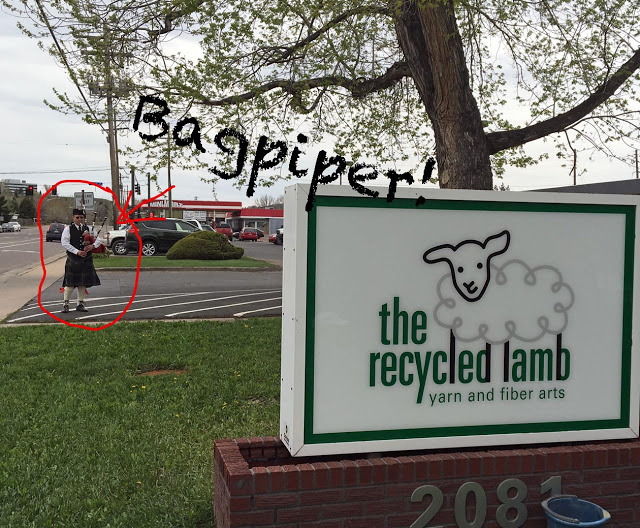
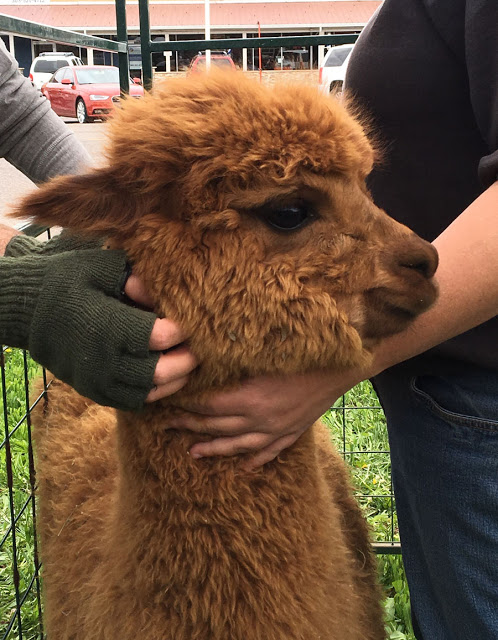
Somehow I wasn't surprised when I pulled into the parking lot of The Recycled Lamb and heard a bagpipe. Bagpipes mean Scotland and Scotland means sheep and well, there weren't any sheep on the lawn of the shop, but there were goats and alpaca and plenty of sheep fleeces.
I drove down for the fleece day to find fiber for a project I want to do this summer. Alas, I have been spoiled by Maggie Casey and the fleeces she gets from Sheep Feather's Farm. Nothing I saw could compare and I'm going to have to somehow bribe either Maggie or the owner of the farm, Robin Phillips for one of those gorgeous corriedale fleeces.
The Lamb has many classrooms and they always have classes going on. This one was ready for a spinning class. I bumped into the knitting teacher from my two-at-a-time-toe-up sock class a few months ago and was happy to be able to say that I am just finishing the ribbing of my first pair of socks knit this way.
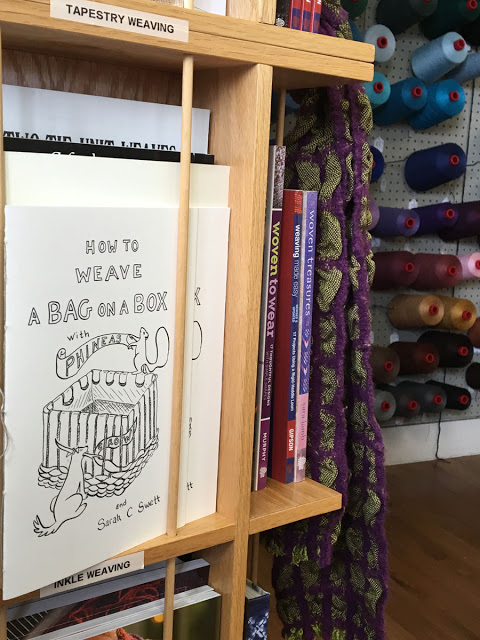
And the Lamb still had a few of Sarah Swett's How to Weave a Bag on a Box. If you can't get one from them, you can get them HERE. You're welcome.

Yarn-y things.


Tapestry process. Design. Dye. Sample. Repeat.

This month I'm working on a design and color palette for a commission. Since having goals and deadlines on a calendar has proved to be a good way to keep myself from frittering away days "playing with yarn", my plan is to start weaving this piece in May. Since May is pretty much tomorrow, I'm hoping to find a wrinkle in time long about Thursday.

While I wait for the client approval on the colors (let's not think about what might happen if they don't like them), I'll show you the process thus far.

After the discussions about design and approval of a preliminary cartoon, I started some sample dyeing. They loved the colors of two of my Emergence series pieces and I started with those.

Dyeing in quart jars is a favorite thing of mine. I like it because I can have 8 new colors per pot in just a few hours instead of eight colors in a whole day. Of course the limitation is the amount of yarn you can fit in a quart jar and with the size pieces I weave, amounts call for bigger pots.

I showed you some of my first colors in THIS post last week.
Here are some of them skeined up waiting for the ball winder.
And after their meeting with the ball winder.
After finishing all of these, I was not happy with the main color for the piece--the deep red-violet in the center above. It seemed too black. In my digging in my yarn samples I found a small ball of the original color from the earlier piece that the clients liked and remembered that one of the dye books I was using back then used a different black formula. So I altered the amount of black and tried again. Perfect.

I wove a sampler showing both of these colors for the client. It turned out so cute I wished I could keep it! The weaving to the left is for the client, the one to the right is a sample for my reference.
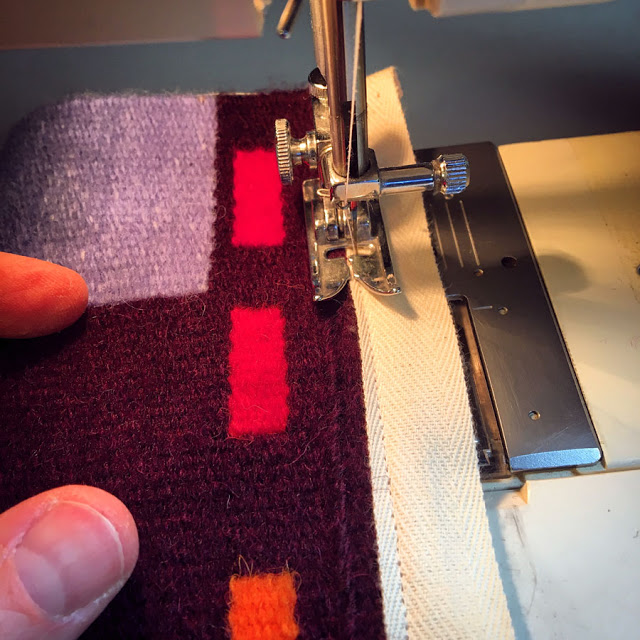
I did the finishing, admittedly while watching Anthony Bourdain's Parts Unknown Sunday night. Gave her a little steam, stitched her up...
...and there you have it.

The old red-violet with more black is on the bottom, the one with less black at the top.
A priority mail box was filled and I was off to the post office.

After the client sees the woven and yarn samples, we get to repeat the process. Hopefully this time with full quantities of yarn.

That moment when you know you know what you know

Ever had that moment when you knew you nailed it? When you had the skill, understood what was happening, anticipated results, made it work?

What does it mean to say you're a professional anyway? I don't know if the answer is the same in every profession. Probably not.

When I was an occupational therapist I pretty much knew that if I could manage to keep a head injured combative man from punching me, transfer a 150 pound quadriplegic by myself, and not break down in tears when I had to clock out and still had two hours of paperwork to do at the rehab hospital all in the same day, I was a professional... or at least had done it long enough to avoid the tears part.

Later in my career when I got smarter and left rehab, I did things like help moms learn to facilitate movement in their low-tone babies, teach calming techniques to grandmothers of drug-exposed infants who screamed all day long (those women are going to heaven, no questions asked), and get an autistic kid to follow a one-step command with a smile (!!!). Professional.

But what does it mean when you work in your studio which is in your house and you wear your home pants* most of the time and some days you feel that if you don't at least get to the grocery store so you can chat up the employees (always pick your checker carefully on those days) you might go a little crazy. I think being a professional artist has many definitions. I saw it just a moment ago when I went out to the garage dye studio to give the yarn on the stove a poke and knew just by the feel of it that it would come to temperature in about 40 minutes, that the dye was taking up evenly, and that it was going to be a perfect hand-dye.
I get the same feeling at the loom fairly often. It is just something in your gut that knows that that curve isn't going to look right unless you add one more sequence or take the corner off that step or change that color in the weft bundle for one bit of hot pink. The fingers that know I've missed a warp thread and have started to take the pick out lest I cause a float before my brain recognizes what I'm doing.

Is that just the definition of practice? Or is there some way to actually quantify what a professional in the field of art is?

I'm not really sure that I should be calling myself a professional here... after all, we haven't decided on a definition and didn't your conservative Christian elementary school teach you not to toot your own horn like mind did? But I feel pretty good about using the word today. Even if I am wearing my home pants.*
_________________________
*home pants. What you call the yoga pants that are really just a half step up from pajamas because it isn't right to wear pajamas all the time.


Dyeing in the sunshine, NO WAIT!... snow

Oh Colorado in April. How we do love your sense of humor.

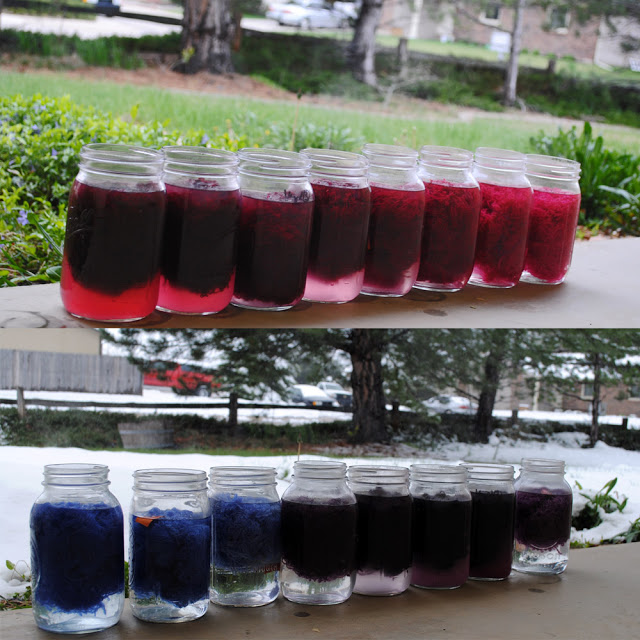
One day I'm dyeing a pink gradation in 70-degree sunshine. The next, I'm cooling my jars in the snow.

I am deep into the dye sampling for a new project. I've spent the last week finalizing the design and talking to the clients about colors... and frankly, reassuring them that I would dye beautiful colors since my computer graphic skills are admittedly poor. The mock-up looked a little like I used spray-paint on the side of a train car perhaps while high on acid. (Don't worry Mom, I just made that up. I've never spray-painted a train car.)

I really love doing the dye sampling. I can test out 8 colors per pot which makes me feel rich at the end of the day. It takes forever to set those pots up, but all those colors are done at once. Unfortunately I can only dye about 30g in a quart jar so the amounts for the full tapestry will have to be done one pot at a time.
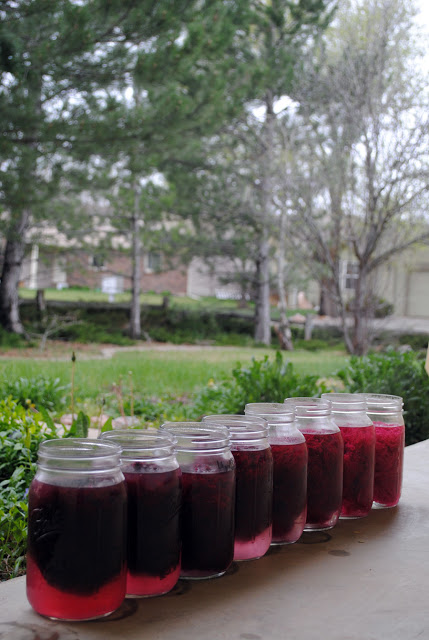
And here are the adorable little skeins. This gradation was one I had done before but it has been awhile, so I wanted to make sure I still liked the colors. 
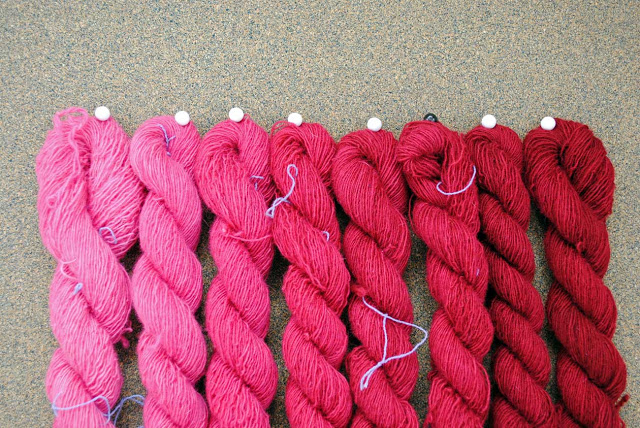
For this project I'm going to need to do some sampling to send to the client for final color approval (see spray-painting on acid above), so having small samples was necessary anyway. This one came out great on the first try. No modifications (that never happens).

One of my

Instagram

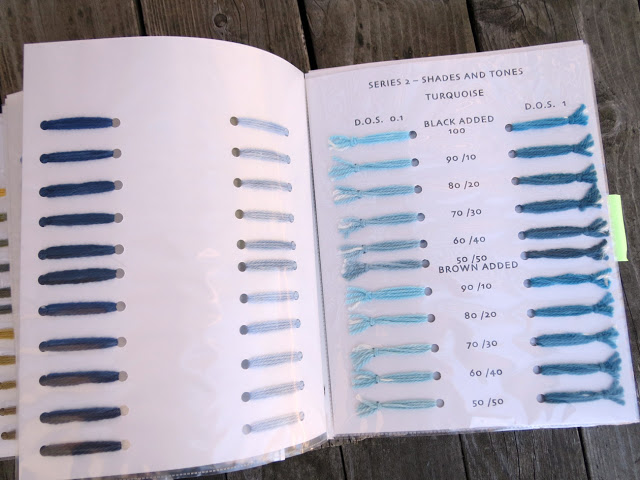
followers asked me about dye sample books. I use three different dye sample resources. The first is my own books created as I dye. Every time I do a dye run I write down the formula for each color on a piece of card stock and put a piece of the yarn next to it. Simple, but effective.
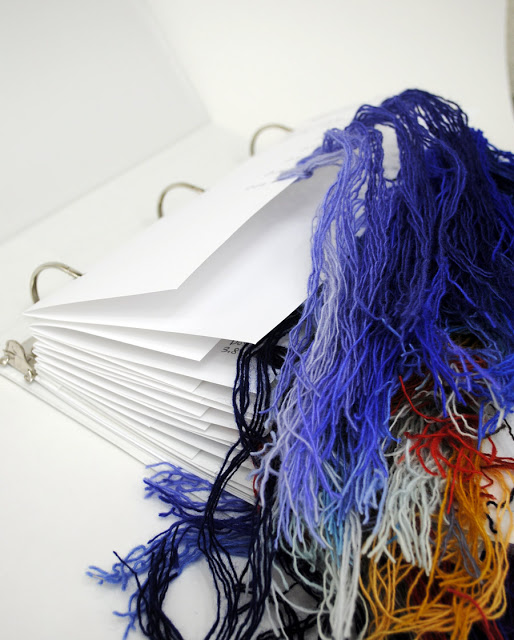
I have two other books. One is by Ginny Phillips. I love this book and have used it heavily for a long time. Ginny is no longer selling these books and I doubt you'd be able to find one anywhere. I now keep mine in a locked fire safe, so don't think you're going to find it!

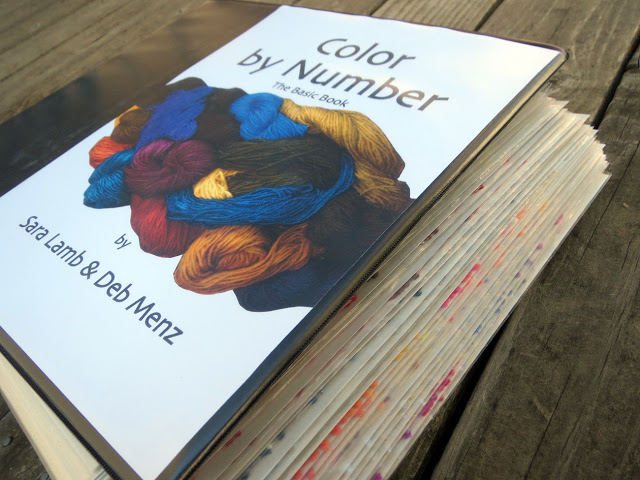
The other resource which you can access is by Deb Menz and Sara Lamb. They produce a set of dye sample books which you can find on Deb's

website

. They are called Color by Number. Yes, they seem expensive at first glance, but think about the time it takes to dye hundreds and hundreds of colors and then loop each piece of yarn through holes on card stock printed with the formulas. Just doing the initial research for these books makes it incredible that they even exist. This is a priceless resource if you are a dyer. The only other way to get this information is to dye all these colors yourself. 
Oh, and in case you were still worried about my

tax day fun

, it turned out okay. Well, the bottom line wasn't fun, but the taxes did get done and submitted on time. Whew.