Be prepared!

Obviously I never qualified to be a boy scout, but my father was one and I grew up with this motto running through the back of my head.

It means that I carry tire chains in my car in the winter.
I have back-up water treatment and a warm jacket in my backpack when in the mountains.
When on my way to a meeting that might cause anxiety (or boredom) of any kind, I grab my knitting.
And my carry-on bag always has an extra pair of underwear, a drop spindle, and a good book. You never know when an overnight at the Dallas-Fort Worth airport is in the cards.

Be prepared.

This tendency also means that I like to have my taxes done not hours, not days, but weeks ahead of time. I just feel better having the last year all buttoned up and put to bed.

You might imagine I was less than thrilled to get an email from my accountant at 7:43 this morning, the very day taxes are due, asking for the password to my Quickbooks account. She has been particularly difficult to get ahold of and I have an appointment in an hour (!) to sign the return. I'm afraid I'm zero for two in the accountant category in our new city. I'm tempted to go back to the CPA I had in Santa Fe.

Some people pull stuff off marvelously at the last minute. I'm keeping an open mind... sort of.

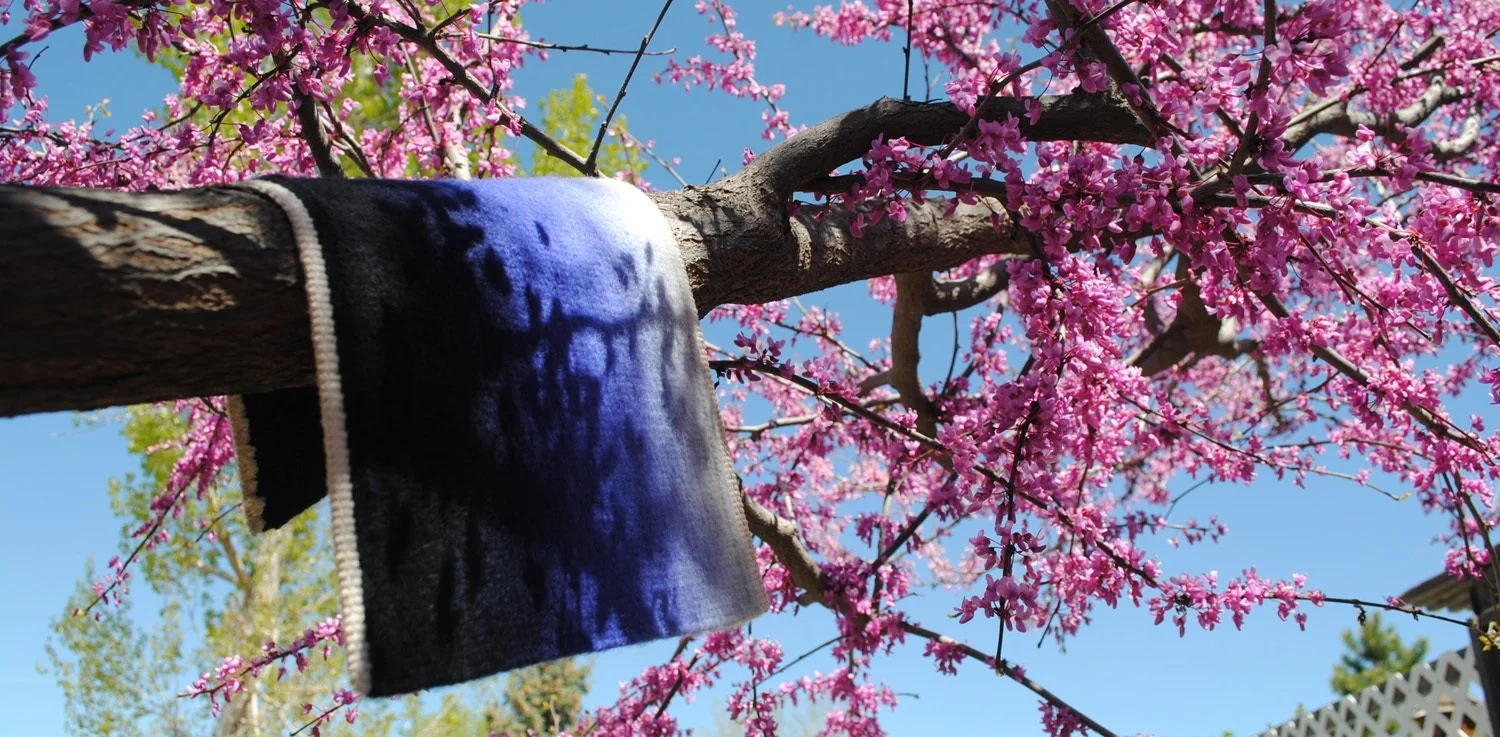
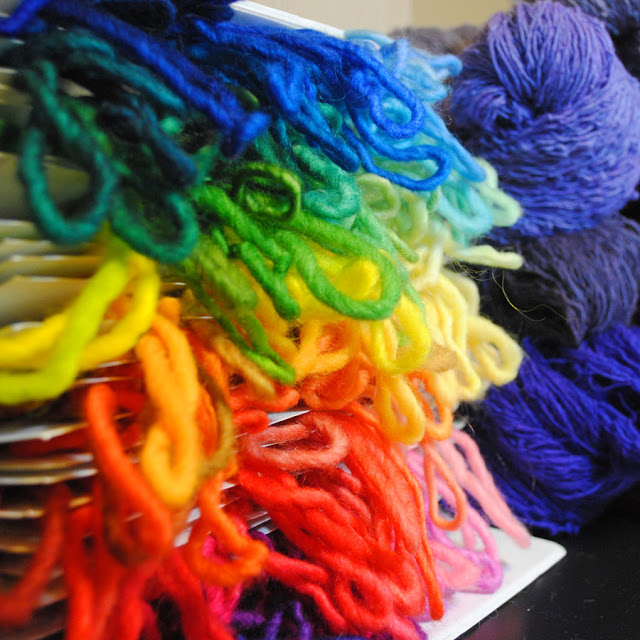
After I survive the most anxiety-producing meeting of the year (I would bring knitting but she only scheduled me 15 minutes, so what would be the point?), I'm back to working on my dye samples.

This commission is due in the fall. I am going to be prepared.
As for the accountant, I'm reasonably sure it'll work out. I do suspect without an extension it is a wee bit late to find a new one for the 2015 tax year though. 

UPDATE: For those of you who have expressed concern about my struggles with business accounting, it worked out okay. I'm pretty sure I'm not going to jail and the CPA pulled through at the last minute. The consolation was that she charged me less than half of what the guy did last year and he was not a CPA.
Dye sample books. Just do it.
I have enough yarn for another big tapestry.

I know this because I just spent all afternoon organizing it and making dye reference cards.

Let me back up.

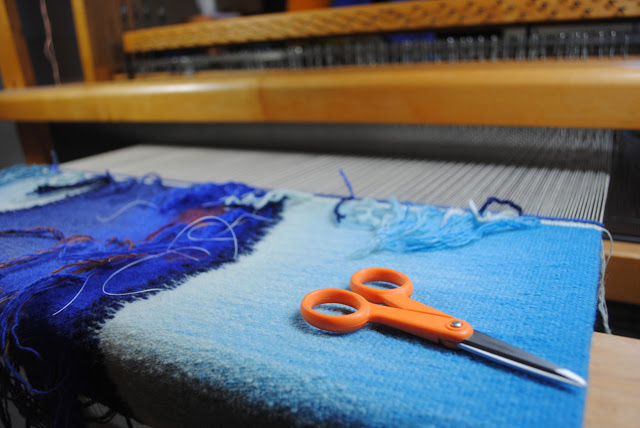
I finished a big piece a few weeks ago. I know there are many of you waiting to see a photo of it, but you'll have to wait a little longer. I'm still doing the finishing and then it has to take a trip to a very busy photographer.

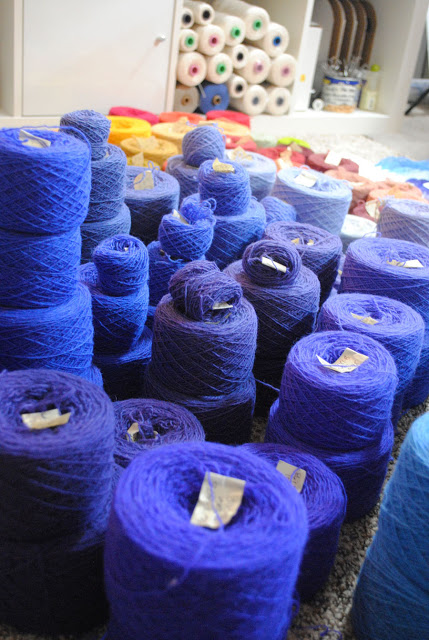
In the meantime I'm busy dyeing samples for the next piece. I have to make room in the studio for the new set of yarn and so it was time to pack up the yarn from the Lifeline piece. It had migrated into every corner. I gathered it all together and organized it, thanking myself for taking the time to write the dye formula on every ball as I was winding them last year. This will allow me to use this yarn for another piece. There is plenty! (honestly, maybe two pieces. big ones.)

Had I not written the formulas on every ball, I might not be able to tell which gradation they went with and would be much less likely to use the yarn in another piece despite all the work that went into dyeing it. Odd balls without the rest of the set quickly make their way to tapestry workshops to be used by students. Not a bad outcome, but why not use all these great gradations again?

It ended up being 90 colors plus another handful of accent colors pulled off the shelf.

Ninety colors is the number I dyed for that piece.

Ninety

.

Each color is dyed in its own pot and each pot takes several hours start to finish. As I was making the color cards I started fantasizing about how wonderful it would be to just order a truckload of yarn from Weavers Bazaar all dyed up and ready to weave. But I fear my process would be missing something vital if I didn't dye my own yarn. For whatever reason, it is what I do.

As a dyer, one of the most important resources you can create for yourself is a file of yarn samples with the dye formulas used to get them. Sometimes it can take many days of sampling in jars to come up with the colors I really want. To have to repeat that work again because I didn't take a few hours to cut pieces of the yarn and write down the formulas would be silly.

So the afternoon found me on the floor of the studio cataloging the yarn for my sample books.

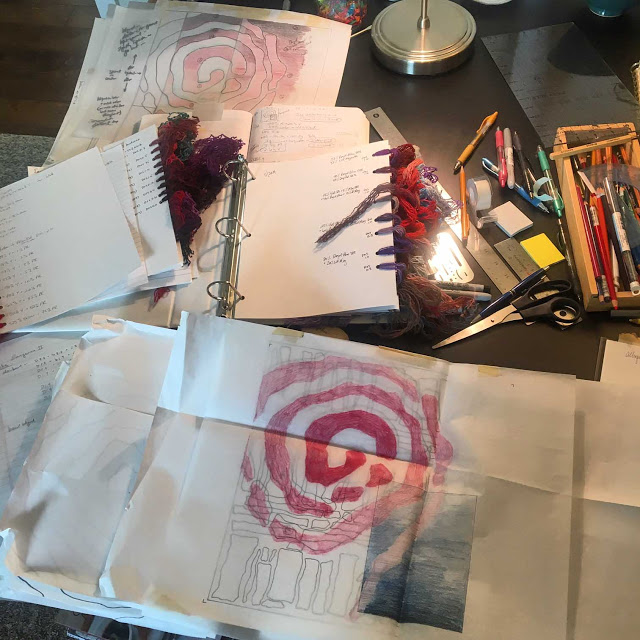
I make a set of cards for each dye project which is usually for a for a tapestry, though sometimes for a workshop I'm teaching. I simply write the formula and depth of shade next to a hole punched on cardstock and put a generous piece of that yarn through the hole. These cards go in a three-ring binder. These binders along with the dye sample books of Ginny Phillips and Deb Menz/Sara Lamb are indispensable resources when planning colors for a new tapestry.

I'm in the middle of dye sampling for a new piece. Stay tuned for more photos of those gradations.

Now the question is, where am I going to store this yarn until I am ready to do a piece in these colors again? My yarn shelf is almost full. I suspect the student workshop yarn is going to get relegated to boxes. Sssshhhh, they'll never know.

Breaking News: Tapestry artist thwarts hoarding nature to discover priceless drawing

Okay, so the drawing wasn't really priceless, just fervently searched for.

Let me back up a little bit.

I am currently working on a commission and the client really loves a couple of my Emergence series pieces and wants some elements from them in her piece. As you can imagine, designing the new piece with those elements is far easier if you have the original drawings.

That was where I thought my "save everything" nature would help me out. The problem? When you save everything, there is so much stuff that it is hard to find what is really important.

I knew where the dye formulas were. I had them in hand in about a minute. Score!

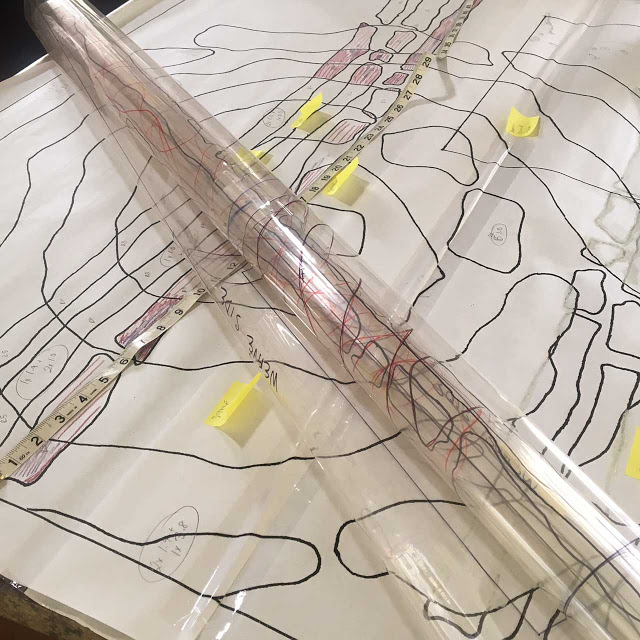
Next I went downstairs to look for the full-sized cartoons. I knew that I hadn't thrown them out, though I was sorely tempted, when I packed up my Santa Fe studio. I also knew they were in a couple long skinny boxes. Found and found. Two minutes for both the paper line drawing and the acetate upside down weaving copy.
But what I really needed was the smaller original drawings. The ones I could copy and modify for the new work. The new piece is about twenty percent larger than the piece I am sourcing the large forms from, so I needed the originals so that I could reposition pieces of the puzzle and then let FedEx Office do the work of the full-size cartoon.

Searched my one flat-file shelf downstairs. Found some cool stuff I had forgotten about, but no Emergence drawings. I put on some shoes and crawled under the stairs where we have some boxes full of things we'll "never need"... after climbing under tubs of stored yarn and sifting through the empty boxes (stored for the next inevitable move), I realized the drawings weren't going to surface.

At that point I gave up. I sat down to re-create the new cartoon from scratch.

But wait! The term "flat file" jogged something in the back of my brain. I remembered an old plastic file box that was shoved in the back of my closet that had received some papers in the Santa Fe move. After moving a good quantity of spinning fiber, I opened the box and right in the middle was a lovely file labeled "Emergence series". Bingo. The drawing I needed was at the back of that file.
Maybe that hoarding nature isn't so bad. What I really need is organization... and a flat file?
I'm off to draw a cartoon. Dyeing by the end of the week if the client likes it!

Teaching an old art form in an inner city Detroit alternative high school... whoot!

Last week I went to Detroit for two purposes. The first is a secret. The second was a day teaching weaving in an alternative high school. My cousin, Mrs. McNeece, is the art teacher there.

From fairly "short" TSA lines at Denver International Airport, I jumped right into my cousin's car at Detroit Wayne-County and she motioned to the box of 94 cardboard looms in the back seat and said, "Start warping."
We did finish warping all of those looms that evening and they were ready to go for her five sections of art the next day.
Wagon of looms
And who is going to turn down an invitation to be a guest artist in a room full of teenagers for a whole day?
Now to be honest, I'm not the best with teenagers. They move quickly, their behavior is erratic, and they are big. But this lot turned out to be rather enchanting. These kids have been sent to this alternative high school for extra help and support. And many of them are thriving here.
My cousin's husband warned me that morning that I might learn some new swear words. I didn't, but there were a few phrases that definitely needed some translation. For example Duane's, "That shit lows [low key] is hard." I am pretty sure that he meant both that it was hard to do the weaving and that he nailed it. He made one of the best weavings of the day, so we're going with that interpretation.

This is Randall. By the last hour of the day, I was a little fried. This had little to do with the kids and more with a whole day of trying to navigate a new and frankly rather feisty environment. Randall jumped into this weaving project with gusto. Despite the chaos that was last period, he figured out that over-under pattern in short order.
Many of these kids have some motor planning issues and none of them had done any weaving before. I was really impressed at how almost all of them jumped into the project. A few of them even filled their looms in the hour.
And the hero of it all was their art teacher, Molly McNeece. She pushes these kids every day. She teaches them responsibility and how to follow through. She also teaches them about art and that they too can be successful at making things. That knowledge translates to other things in their lives. She often has graduates come back and tell her that her insistence that they do their work was the thing that got them to (and through!) college. That folks, is the definition of success. It does not come without a price. These teachers don't get many breaks and usually when they do, they use them to help whatever kid is in crisis that day. We won't even mention what they are paid, but believe me, it should be at least doubled. Mrs. McNeece's room is a place they can be successful and the kids gravitate to it.
And while I was in Detroit, I spent some marvelous time with my oldest friend. We met in preschool, were college roommates, and still like each other all these decades later.
I also got to snuggle with a couple Rottweilers and hang out with my marvelous cousins, goofiness and all.
Top left clockwise: Me and Tulip; breakfast at sunrise cafe with Molly and Ella; the amazing Bill, master of the double nose-flute; clay faces made by Molly's students; me teaching weaving; center: CJ, the big-hearted beagle.

This is the only hint you're going to get about my first reason for the trip.
Molly McNeece is an illustrator who just published her second book. The first was an amazing digital book called Surviving the Zombie Apocalypse which she created with her husband, Alex McNeece. If you have an iPad or iPhone, you're going to want to get this book. It is sort of a choose-your-own adventure zombie romp and the illustrations are amazing. (Also, it is currently priced at $1.99.) It is so cleverly done. Make sure to look for the extra hidden illustrations. Her new book is Joshua and Jasmine go to Kindergarten, published by Nelson publishing. It will be released any day now. Make sure to visit Molly's website HERE.

"Yo! McNeece!"

People who knit at breakfast

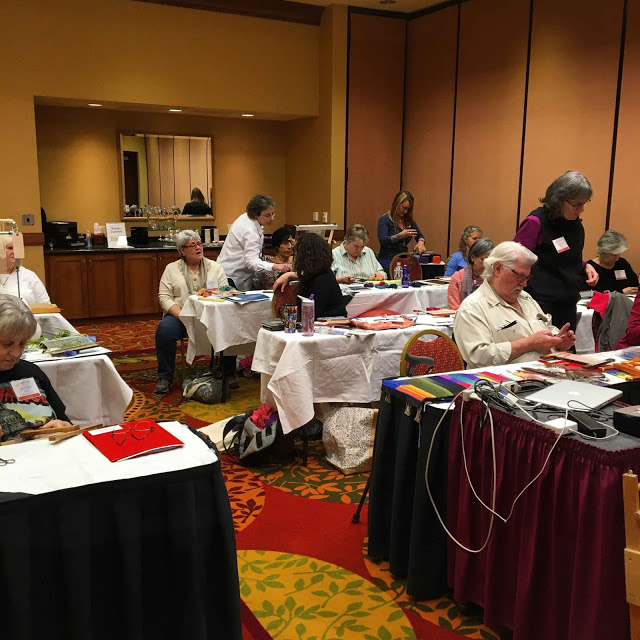
I was at YarnFest in Loveland, Colorado this week. I just pulled out my camera and downloaded my photos only to find I took only a few. But you're in luck because I did apparently take more with my cell phone.

This happens at a conference. I am so focused on making sure that my teaching materials are prepared and that I haven't forgotten something important (like that connector cord from the Mac computer to the digital projector... most important piece of equipment ever).

I was thrilled to be teaching at a venue that was just down the highway a bit from my home and studio. Interweave did a great job putting this on.

I did a lot of prep for this conference... including making looms.
Kathe Todd-Hooker has instructions for this loom in her book, Tapestry 101.

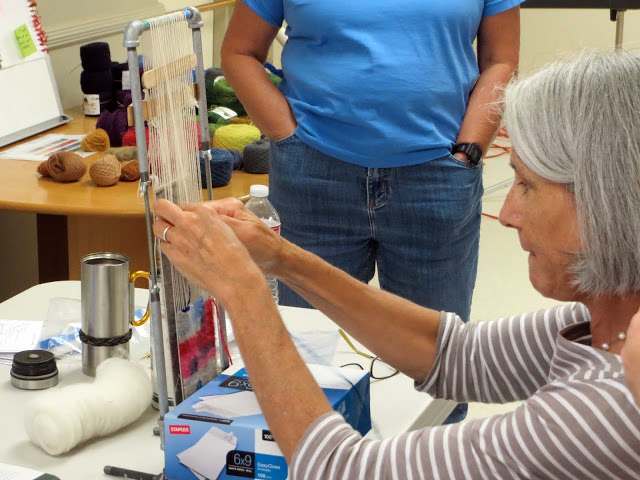
And warping many looms for the Tapestry Answers class...

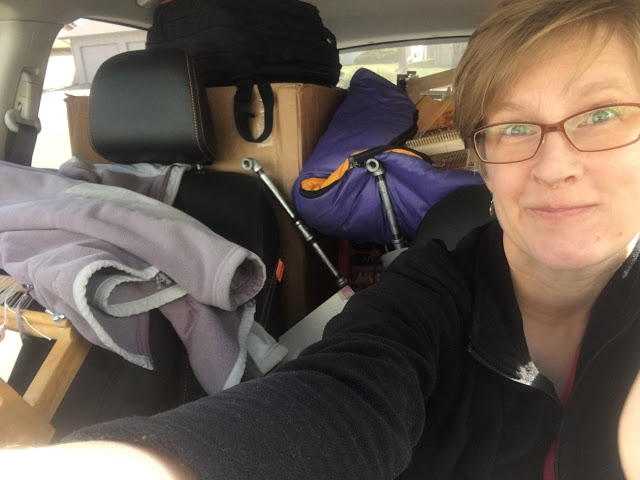
Putting together exercises and packing it all into the car...

There is the arrival and finding the teaching room...

And the unpacking of all the stuff early the next morning before the students arrive. And then welcoming everyone to a fun-filled day of tapestry experiences.

Ten points if you can tell me who my surprise student was in the Color class (I was secretly thrilled and a little terrified)... of course the points aren't redeemable for anything, but we like to get points here in America.

I only had time for one quick run through the vendor hall, and the most shocking thing is that I purchased nothing. I dare say had I felt a little less pressed for time, that shawl pattern and a few skeins of yak would have come home with me.

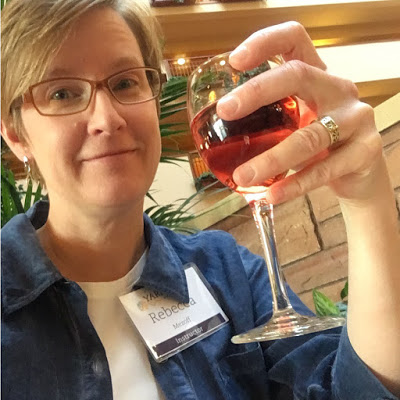
This particular hotel had a manger's reception each night. I did manage to sit long enough to have a glass of wine before heading to the Yarn Along on Friday.

I did get to hear Clara Parkes speak on Saturday night and that was marvelous. I stayed up a little too late one night reading her new book, Knitlandia. It starts in Taos, NM and how could I not keep reading?

I did a wee bit of knitting at breakfast one day. There were people with knitting and crocheting and spinning wheels everywhere. These were my people... People Who Knit At Breakfast.


I met a few new instructors and many new fiber enthusiasts. I had time to talk to some editors from Interweave and catch up with a few old friends.
Rebecca Mezoff, Emergence IV

The cutest little loom you ever did see

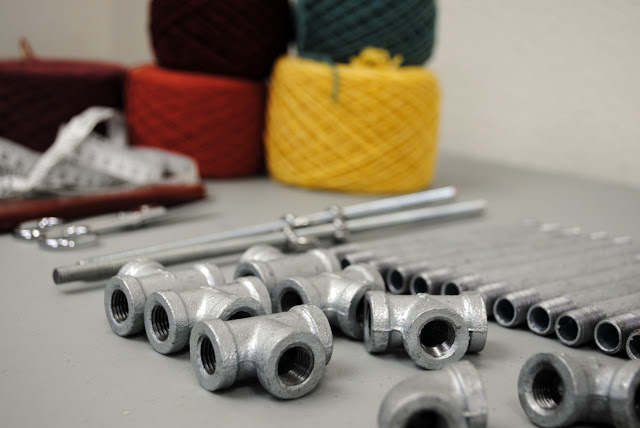
I'm teaching one of my favorite classes at YarnFest next week. It is an introductory class called Tapestry Answers and it is all about why you might want to be a tapestry weaver.  The class includes being able to try out a wide variety of tapestry looms. I've been wanting to add some different looms to my stash for students to try for a long time and so yesterday I made a trip to a couple hardware stores for the parts.
I was inspired by a recent post by Tommye Scanlin on her Tapestry Share blog where she built a tiny galvanized pipe loom.
And before that I was inspired by seeing Sarah Swett's little pipe loom in a workshop and her subsequent posts about looms on her blog.
And before Sarah Swett introduced me to the tiny pipe looms, I read about all manner of looms in Kathe Todd-Hooker's books So Warped and Tapestry 101.
And I would dare bet that all three of these tapestry artists got a lot of their information straight from Archie Brennan.
Sarah Swett weaving on a small galvanized pipe loom she made
I have been influenced by all four of these sources and the links to their work are below.
To paraphrase something Archie says in his DVD series, hardware stores stock looms! You just have to know how to put the parts together.

Yesterday I set out with the intention of getting parts for two looms: a very simple copper pipe loom, and a tiny galvanized pipe loom.

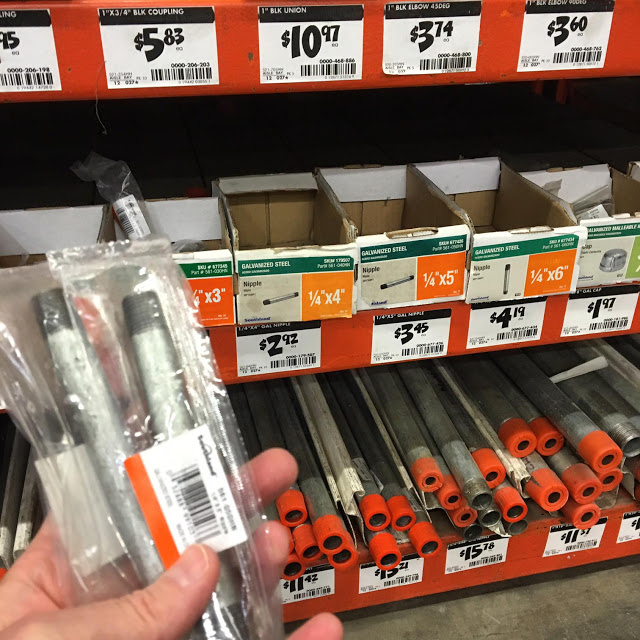
I have been asking about 1/4 inch galavanized pipe at hardware stores here in Fort Collins for at least six months and not found it. But after seeing the photos on Tommye's post, I had a better idea of what I was looking for. The first hardware store had the copper pipe and elbow joints, but they didn't have the steel pipe I wanted.

The second store had a row of dusty boxes labeled 1/4" nipple... and that was what I was after. I bought almost their entire stock and judging by the layer of dust on these parts, they aren't restocking. For a complete list of parts, see the Tapestry Share blog post linked below.
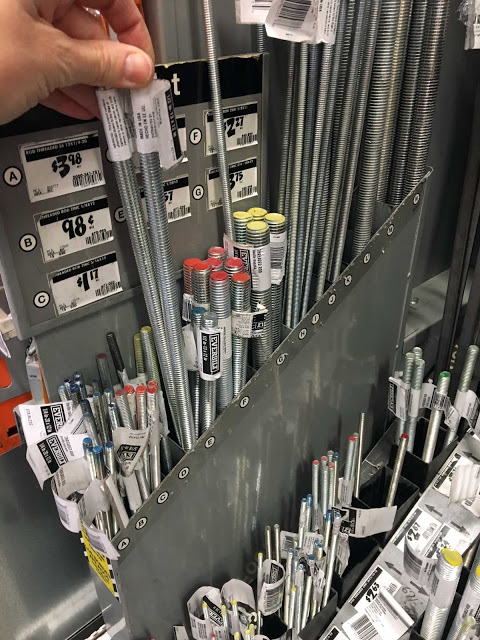
All the steel parts were in the shopping cart. I'd already bought the copper at the last store. All I needed was threaded rod. In case you hate wandering around a big box store pushing a gargantuan cart as much as I do, look in the vicinity of the hardware first. The big orange box had the rod I needed for both looms as well as wing nuts and hex nuts.
The galvanized pipe loom was pricier than I thought it would be. The copper pipe loom parts were definitely cheaper and I even bought the special locking corner joints so I don't have to solder. I'll give you a price comparison when I get the second loom done.

This is what two looms look like when you're hunting in the hardware store.


Links to make your own pipe loom:
Tapestry Share post by Tommye Scanlin
Sarah Swett's post about pipe looms on her blog, A Field Guide to Needlework
Kathe Todd-Hooker's website: Tapestry 101 has a great description of how to make a copper pipe loom and So Warped shows you how to warp a million kinds of tapestry looms.
And Archie Brennan's legendary loom plans can be found on his website.


The galvanized pipe loom goes together in a snap. I spent much longer shopping than assembling it.

I'd put that second loom together right now, but I have about a foot of snow to shovel first.
Yesterday I put the little loom pictured at the top of the post together on the back deck in the sunshine in a T-shirt.
This morning, this is what I woke up to. Welcome to spring!

I am pretty sure the garbage man is not going to pick up our recycling today. I am off to find the sidewalk that is under that drift. The daffodils are going to have to fend for themselves.

P.S. I still have spots in my color class at YarnFest. Live close enough to Colorado to come and hang out with me? I'd love to see you. 
P.P.S. I thought my Tapestry Answers class that I am using these looms for was full, but it turns out it isn't. You can still get in. HERE

When what you make doesn't feel so great.

I've been thinking about finishing today. Perhaps that is because I just cut a big piece off the loom last night and it feels pretty good to have the weaving part of it done.

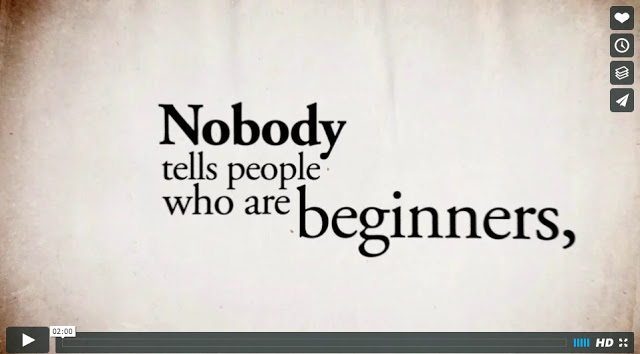
This Ira Glass quote turned into a 2 minute video came across my desktop today and I thought I should share it with you. Ira talks about what happens when you begin. How when you start making things and you're learning a new skill, what you make isn't that good. It is easy to get discouraged and give up. But people don't fail because they aren't good at something. They fail because they stop trying.

So if you're weaving your first set of tapestries and you aren't all that happy with what is coming off your loom, keep trying! Give yourself some credit for working at it. The practice will pay off. Notice what you love about the piece even if it is something as small as a specific color or yarn choice. Notice that thing you like and write it down. Use that bit of information in the next iteration.

And then start again. Because you'll only get better by practicing.

(Please click the link below the image. Blogger doesn't allow photos to link.)